Role of Penetration Testing in Industry Security
Role of Penetration Testing in Industry Security

Compliance demands more than another checkmark on your security to-do list. For healthcare and industrial leaders, the difference between vulnerability scanning and penetration testing is often misunderstood, leaving critical systems exposed. True penetration testing puts your defenses to an active test, using the same tactics as real attackers to find and exploit weaknesses before someone else does. In this article, you will uncover how structured testing uncovers hidden risks, dispels common myths, and strengthens your security and regulatory posture.
Table of Contents
- Defining Penetration Testing and Common Myths
- Types of Penetration Tests and Methodologies
- Penetration Testing for Regulatory Compliance
- Real-World Applications Across Key Industries
- Risks, Limitations, and Avoiding Pitfalls
- Managing Testing Risks
Key Takeaways
| Point | Details |
|---|---|
| Understanding Penetration Testing | It is an active security assessment that simulates real attacks to identify vulnerabilities rather than a mere compliance tool. |
| Importance of Continuous Testing | Regular penetration testing is essential due to the dynamic nature of IT environments; vulnerabilities can emerge at any time. |
| Myths About Penetration Testing | Penetration testing is not interchangeable with vulnerability scanning; it provides a deeper understanding of risks through combined automated and manual methods. |
| Alignment with Compliance Requirements | Penetration testing must be integrated into compliance frameworks to validate security controls and ensure regulatory adherence. |
Defining Penetration Testing and Common Myths
Penetration testing represents a deliberate, controlled security assessment where trained professionals attempt to breach your organization's defenses using the same methods and tools that malicious actors would employ. Rather than a passive compliance checkbox, penetration testing methodology involves active attempts to circumvent security controls, exploit vulnerabilities, and identify weaknesses before attackers discover them. For healthcare and industrial organizations, this distinction matters significantly. You're not simply scanning for known vulnerabilities or checking boxes on a compliance form. You're simulating realistic threats to understand exactly how an attacker could infiltrate your network, access sensitive patient data, or disrupt critical operations.
The process itself follows distinct phases. It begins with test preparation, where your penetration testing team gathers intelligence about your systems, infrastructure, and security posture. The execution phase follows, involving active attempts to exploit vulnerabilities through techniques like social engineering, network intrusion, or application hacking. Finally, the analysis phase evaluates your organization's ability to detect, respond to, and contain these simulated attacks. This comprehensive security assurance method goes deeper than standard vulnerability scanning because it actually attempts to gain unauthorized access, providing a realistic assessment of your true security posture rather than theoretical risk ratings.
Misunderstandings about penetration testing often prevent organizations from maximizing its value. The first major myth is that penetration testing and vulnerability scanning are interchangeable. While vulnerability scanning identifies known weaknesses through automated tools, penetration testing combines automated scanning with manual expertise to exploit those findings and chain together multiple vulnerabilities into a realistic attack path. A scan might flag outdated software, but penetration testing reveals whether that outdated software can actually be weaponized to access your electronic health records or manufacturing control systems. Another persistent myth suggests that penetration testing creates unnecessary risk or damage to your systems. Professional penetration testers work within carefully defined scopes and rules of engagement, use controlled techniques that avoid system damage, and maintain detailed documentation throughout. They're not trying to break your systems; they're proving what could break them before criminals arrive. Perhaps the most damaging myth is that a single annual penetration test satisfies security requirements. Your environment changes constantly with new deployments, configuration modifications, and emerging threats. What was secure six months ago may be vulnerable today. Healthcare organizations especially face this challenge as they add new medical devices, integrate cloud services, or update clinical systems. Industrial facilities encounter similar pressures when implementing Industrial Internet of Things devices or upgrading control systems.
Pro tip: When selecting a penetration testing partner, verify they understand your industry's specific regulatory requirements and attack surface. A firm experienced with HIPAA compliance and healthcare network architecture will identify vulnerabilities that generic testers might miss.
Types of Penetration Tests and Methodologies
Penetration testing isn't a one-size-fits-all approach. Different test types target different parts of your security infrastructure, and choosing the right combination depends on your organization's unique risks and assets. The most common penetration test types each reveal distinct vulnerabilities within your environment. Network penetration tests focus on your infrastructure layer, attempting to breach firewalls, routers, switches, and internal network segmentation to access critical systems and data. Web application penetration tests target custom applications, cloud-based services, and web interfaces that your staff and patients or customers interact with daily. Social engineering tests evaluate your organization's human vulnerabilities through phishing campaigns, pretexting, and physical security probing. Wireless security tests examine your Wi-Fi networks and mobile device ecosystems. Industrial control system (ICS) tests specifically target operational technology environments in manufacturing and utility settings, where a breach could disrupt production or endanger physical safety. For healthcare organizations, medical device penetration tests have become critical as hospitals increasingly rely on connected diagnostic equipment, infusion pumps, and patient monitors.

The methodology behind these tests follows a structured framework. Penetration testing methodologies typically include pre-engagement planning where scope and objectives are defined, intelligence gathering to understand your systems and defenses, threat modeling to identify likely attack paths, and vulnerability analysis to find weaknesses. The actual exploitation phase attempts to verify vulnerabilities and chain multiple findings together into realistic attack scenarios. Post-exploitation activities demonstrate what an attacker could accomplish once inside your environment, such as accessing backup systems, escalating privileges, or exfiltrating data. Finally, comprehensive reporting translates technical findings into business context. This structured approach matters because it ensures consistency. Your penetration test conducted in March should follow the same rigor as one performed in September, allowing you to measure whether security improvements actually reduced your risk.
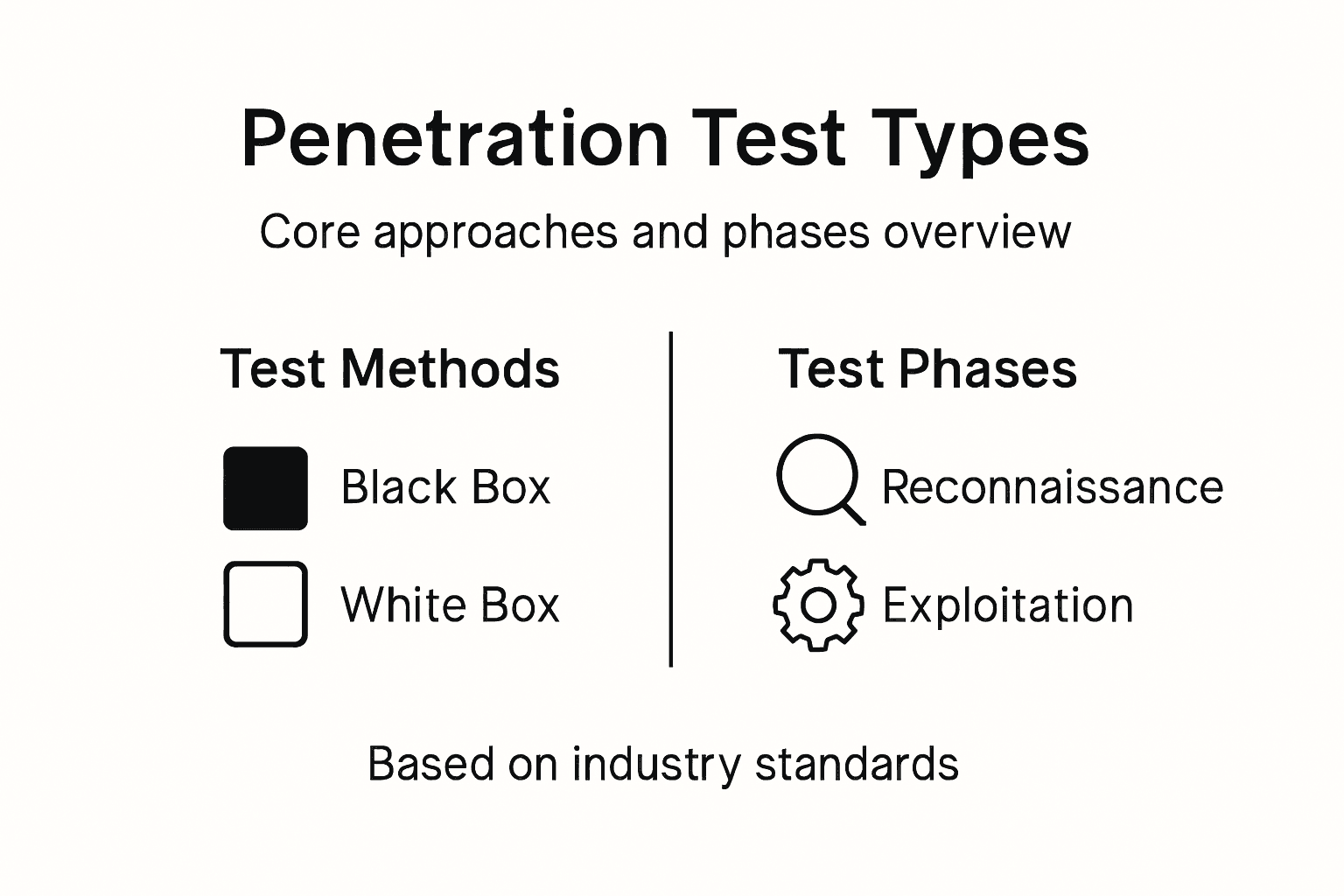
These methodologies also vary in how they approach your organization. Black-box testing simulates an external attacker with zero prior knowledge of your systems, networks, or architecture. Testers must conduct extensive reconnaissance and make educated guesses about your infrastructure. This approach reveals how vulnerable you are to outside threats but can consume significant time. White-box testing provides the penetration testing team with detailed system documentation, network diagrams, credentials, and architecture information. This allows testers to focus on deeper exploitation and post-exploitation scenarios rather than spending days on reconnaissance. It's more efficient for identifying sophisticated vulnerabilities but doesn't simulate external threats. Gray-box testing sits in the middle, providing limited information as if a tester had obtained some insider knowledge through a smaller breach or social engineering success. For most healthcare and industrial organizations, gray-box testing offers the best balance between realistic threat simulation and efficient resource use. Your testing strategy should include all three types across different assessment cycles. An external threat is real, but so is insider risk and the subtle vulnerabilities that only surface when someone with partial system knowledge digs deeper.
Here is a comparison of the three main penetration testing methodologies, helping you choose the best fit for your organization:
| Approach Type | Attacker Simulation | Information Provided to Testers | Best Use Cases |
|---|---|---|---|
| Black-box | External attacker | No internal details | External threat assessment |
| White-box | Insider attacker | Full system documentation | Deep vulnerability analysis |
| Gray-box | Partial insider | Limited system insights | Balanced risk simulation |
The scope and frequency of your testing depends on your regulatory environment and risk profile. Healthcare organizations under HIPAA requirements must conduct annual security assessments. Industrial facilities handling critical infrastructure often require testing aligned with NERC CIP standards. However, annual testing alone leaves significant gaps. Consider implementing penetration testing on a rolling basis throughout the year, targeting different systems quarterly. This approach catches vulnerabilities introduced by new deployments or configuration changes before they become critical issues. Post-incident testing also proves valuable. After any security event or significant system change, a focused penetration test validates that your remediation efforts actually worked and that attackers couldn't have exploited additional weaknesses during the incident.
Pro tip: Coordinate your penetration testing schedule with your IT change management calendar to test new systems and configurations shortly after deployment, when vulnerabilities are most likely to exist and before they're exploited in production.
Penetration Testing for Regulatory Compliance
Regulatory compliance and penetration testing are deeply intertwined for healthcare and industrial organizations. You cannot achieve meaningful compliance without security testing, and penetration testing alone becomes fragmented without compliance frameworks to guide it. The relationship works both ways. Compliance requirements like HIPAA, PCI DSS, and NIST establish the security baseline your organization must meet, while penetration testing validates whether you actually meet it. When a healthcare compliance officer asks whether your patient data is truly protected, penetration testing provides the evidence. When an industrial facility manager needs to verify that operational systems are secure against targeted attacks, penetration testing demonstrates the current state of defenses. This alignment between regulatory mandates and security validation is not optional. Auditors expect to see evidence that your organization has tested its security posture through realistic attack simulation, not just implemented checkbox controls.
Different regulations require different penetration testing approaches. HIPAA mandates that covered entities and business associates conduct annual security assessments that include simulated cyberattacks to identify vulnerabilities in systems handling protected health information. PCI DSS requires quarterly penetration testing for payment card processors and merchants, with annual testing conducted by external qualified security assessors. NIST SP 800-115 provides federal guidance on security testing and assessment methodologies, and agencies handling sensitive data must follow its recommendations. FISMA compliance for government systems requires documented penetration testing results that demonstrate security controls are functioning as designed. Industrial organizations working with critical infrastructure often must comply with NERC CIP standards, which mandate vulnerability assessments and penetration testing aligned with your asset criticality level. The specifics vary, but the core requirement remains consistent across all frameworks: you must prove through active testing that your security controls work against realistic threats. Penetration testing validates security controls and system boundaries in adherence with standards such as FISMA and NIST SP 800-115, ensuring compliance with federal regulations and industry requirements. This validation goes deeper than documentation review or configuration audits alone.
Below is a summary of regulatory requirements by industry, clarifying how audits and standards guide penetration testing schedules:
| Industry | Key Regulation | Testing Frequency | Compliance Focus |
|---|---|---|---|
| Healthcare | HIPAA | Annual, post-changes | Patient data protection |
| Finance | PCI DSS | Quarterly, annually | Payment card security |
| Federal Agencies | FISMA/NIST 800-115 | Regular, per policy | Classified information |
| Industrial/Utility | NERC CIP | By asset criticality | Critical infrastructure |
Documentation from penetration testing serves critical compliance functions. The test results provide auditors with concrete evidence that your organization has taken proactive steps to identify and remediate vulnerabilities. The methodology and scope of testing demonstrate that you're following industry-accepted best practices rather than conducting ad hoc security checks. Test reports that map findings to specific regulatory requirements show auditors that you understand the compliance landscape and are addressing actual risk, not just theoretical concerns. For healthcare organizations, penetration test results become part of your Risk Analysis documentation required under HIPAA Security Rule. For PCI DSS environments, they demonstrate to payment card networks that you're actively managing security. For critical infrastructure operators, they provide documentation of your security posture for regulatory filing and incident response readiness. Many organizations make the mistake of treating penetration testing as a standalone technical activity rather than a compliance asset. When you integrate testing results into your compliance programs, suddenly the findings have visibility and action at leadership levels. A vulnerability discovered through penetration testing that gets documented in your compliance file is far more likely to receive funding for remediation than one buried in a technical report.
The timing and frequency of penetration testing must align with compliance deadlines and risk changes. Annual penetration testing meets baseline HIPAA requirements, but healthcare organizations with electronic health record system updates should test after major implementations to ensure compliance isn't broken by new configurations. PCI DSS organizations require quarterly testing at minimum, but consider testing more frequently if you handle sensitive data through multiple channels or deploy new payment processing systems. After any breach or security incident, penetration testing validates that your incident response actually addressed the root cause and that attackers couldn't have exploited related vulnerabilities. When regulations change or new standards emerge, conduct testing that maps to the new requirements before your compliance deadlines arrive. Industrial facilities should test whenever operational technology systems are modified, control systems are updated, or new connected devices are added to production networks. Building penetration testing into your standard change management process transforms it from a compliance burden into a continuous security validation mechanism. The organizations that thrive with regulations are those that view compliance testing not as an annual chore but as an integrated part of their security operations.
Pro tip: Schedule penetration testing to complete 60 to 90 days before your compliance audit or renewal deadline, giving you time to remediate findings and demonstrate corrective actions to auditors.
Real-World Applications Across Key Industries
Penetration testing isn't theoretical. Every day, organizations across healthcare, manufacturing, finance, and government rely on it to identify real vulnerabilities that could expose patient data, disrupt production lines, compromise financial systems, or threaten national security. The specific threats and assets vary dramatically by industry, which is why a one-size-fits-all approach fails. A healthcare organization's primary concern is protecting electronic health records and ensuring clinical systems remain operational. An industrial manufacturer worries about protecting proprietary designs, controlling production systems, and preventing downtime that costs thousands per minute. A financial institution focuses on transaction security, customer data protection, and regulatory reporting systems. Understanding how penetration testing applies across these different contexts helps you design a testing program that addresses your actual risks rather than generic vulnerabilities.
In healthcare, penetration testing protects both data and lives. Medical devices like infusion pumps, ventilators, and patient monitors have become networked, creating attack surfaces that didn't exist five years ago. A successful breach could theoretically allow an attacker to modify medication doses or interrupt life support monitoring. Beyond devices, healthcare organizations must protect electronic health records systems, billing platforms, and patient portals where criminals actively hunt for credentials and personal information to commit identity theft or insurance fraud. Penetration testing in healthcare also validates isolation between clinical networks and corporate networks, ensuring that a breach of administrative systems doesn't cascade into operating rooms. Penetration testing helps identify vulnerabilities across industries including healthcare to prevent attacks and support risk management. In practice, this means testing whether an attacker could access the hospital network through a connected coffee machine on the cafeteria floor, then pivot to clinical systems. It means simulating a phishing attack targeting nursing staff to see if they would unwittingly provide credentials. It means verifying that even if an attacker gained access to a wireless network in the parking lot, segmentation rules would prevent them from reaching patient data servers.
Industrial and manufacturing environments face uniquely dangerous threats where security breaches can cause physical harm or environmental damage. An attacker who compromises a manufacturing control system could cause equipment to malfunction, creating safety hazards for workers or producing defective products that reach customers. In chemical processing facilities or utility operations, a breach could trigger environmental releases or power disruptions affecting thousands of people. Penetration testing in these environments requires specialized knowledge because operational technology systems operate differently than IT networks. They prioritize availability and reliability over frequent patching, they often run legacy software that cannot be easily updated, and they use specialized protocols that standard security tools don't understand. A penetration test of an industrial facility must account for these constraints while still identifying realistic attack paths. This might include testing whether someone could physically access control system terminals, whether wireless networks used for monitoring could be intercepted, or whether vendor remote access tools have weak authentication. Industrial organizations also must validate that safety systems remain independent and that emergency shutdown procedures cannot be remotely triggered by an attacker who gains access to production networks.
Financial institutions and payment processors operate under intense scrutiny from regulators and payment card networks, making penetration testing both mandatory and continuous. These organizations must test their customer-facing applications, internal systems, vendor connections, and physical security around data centers and ATM networks. The financial sector also pioneered many penetration testing practices because they were early targets of sophisticated cybercriminals. A penetration test at a bank might reveal that credit card processing systems are accessible through a seemingly unrelated vendor connection, or that social engineering could convince an employee to install malware on their workstation. Financial institutions also test their incident response procedures through penetration exercises, ensuring that security teams can actually detect and contain an attack in real time rather than discovering a breach weeks later through external notification.
Government agencies and contractors handling classified or sensitive information operate under frameworks like FISMA that mandate regular penetration testing. These organizations must demonstrate to oversight bodies that their security controls work against sophisticated, well-resourced adversaries. The testing must be comprehensive, covering not just IT systems but also physical security, personnel vetting, and insider threat detection. Government penetration tests often involve red teams that operate over extended periods, attempting to maintain persistent access and exfiltrate data while evading detection by blue team defenders. This type of testing informs budget decisions about security investments and demonstrates whether multi-million-dollar security programs actually detect determined adversaries.
Pro tip: When planning penetration testing for your industry, prioritize testing the systems and data that would cause the most damage if compromised, then work backward to test the access paths attackers would most likely use to reach those assets.
Risks, Limitations, and Avoiding Pitfalls
Penetration testing carries real risks that organizations must understand and manage carefully. Unlike vulnerability scanning, which is purely passive observation, penetration testing involves active attempts to breach systems and exploit vulnerabilities. This means testing can potentially disrupt services, corrupt data, or trigger security responses that impact your organization's operations. A penetration test that crashes a production database server or triggers an automated lockdown that prevents legitimate users from accessing critical systems has caused more damage than the vulnerabilities it was designed to find. The stakes are even higher in healthcare and industrial environments where disruptions translate directly to patient harm or safety incidents. A failed penetration test of a hospital's electronic health record system during patient care hours could prevent clinicians from accessing medication histories. A test that destabilizes an industrial control system could halt production or trigger safety interlocks designed to prevent equipment damage. These aren't theoretical concerns. They happen when organizations fail to properly scope, authorize, and execute penetration testing.
The most dangerous pitfalls stem from incomplete authorization and unclear scope. Penetration testing risks include system disruption without clear scope definitions and proper authorization. A penetration tester who goes beyond the agreed scope without explicit permission creates legal exposure for your organization and potentially commits crimes. If your penetration testing agreement authorizes testing of web applications but a tester decides to probe the industrial control network, that unauthorized access could violate the Computer Fraud and Abuse Act regardless of your good intentions. Communication breakdowns between IT, security, and operations teams compound this risk. A penetration test scheduled for a weekend might collide with emergency system maintenance. A test that targets a vendor connection might disrupt services that your organization depends on. These failures occur because penetration testing was planned in isolation rather than coordinated across the organization. Other significant limitations include incomplete coverage and false confidence from negative results. A penetration test that focuses narrowly on network security might miss vulnerabilities in web applications. A test that shows an attacker cannot reach a particular system might miss the fact that they could reach it through a different path. Social engineering tests often fail to include all user populations, missing vulnerabilities in contractor access or third-party user behavior. A penetration test showing you found no critical vulnerabilities can create dangerous overconfidence if the test simply didn't look in the right places.
Ethical and legal boundaries require careful navigation. Penetration testers must operate within strict ethical guidelines and legal authorization. Ethical concerns require proper authorization and transparency to prevent misuse or misunderstandings. This means your organization must provide written authorization for penetration testing that specifies exactly what systems can be tested, which techniques are permitted, and which are explicitly prohibited. Some techniques like malware deployment or hardware implantation might be too risky for your environment even though they represent realistic attacker behavior. Personnel must understand that penetration testing is authorized and that test activities should not trigger emergency responses or panic. Nothing undermines a penetration test faster than security operations teams initiating incident response against the authorized testers, wasting hours and creating dangerous confusion. Some organizations have also created unintended legal exposure by failing to properly handle sensitive data discovered during testing. If a penetration tester gains access to protected health information during a test, that access must be documented, justified, and controlled according to HIPAA requirements. Similarly, accessing payment card data during PCI DSS testing creates compliance obligations around how that data is handled and destroyed.
Skill gaps represent another critical limitation. Penetration testing requires specialized knowledge about attack techniques, system architectures, and specific technologies relevant to your environment. A penetration tester with expertise in web applications may lack the specialized knowledge needed to test industrial control systems safely. A tester skilled in IT security might not understand the unique constraints and vulnerabilities of operational technology environments. Hiring inexperienced testers to save money often results in incomplete testing that misses critical vulnerabilities or creates unnecessary risks. This is why organizations should work with qualified penetration testing firms that demonstrate relevant industry experience and professional certifications. Beyond technical skill, testers must also demonstrate judgment about when to stop exploiting a vulnerability. A tester who gains access to patient data should immediately report it and cease further access rather than continuing to explore and potentially causing damage or creating compliance violations.
Managing Testing Risks
Organizations can mitigate penetration testing risks through careful planning and execution. Begin with a detailed scope document that specifies exactly which systems, networks, and applications will be tested, which will be off limits, which techniques are authorized, and which are prohibited. Include specific constraints around production systems, critical infrastructure, and sensitive data access. Schedule testing during maintenance windows when disruptions are manageable, and ensure IT operations teams understand the testing schedule and can respond appropriately if issues arise. Establish clear communication channels between penetration testers and your IT staff so problems can be addressed immediately. Require penetration testing teams to conduct initial reconnaissance and planning with your operations teams to understand system criticality and potential ripple effects. Test in non-production environments first to validate techniques before running against live systems. Establish clear success criteria that focus on identifying vulnerabilities rather than proving that testers can cause maximum disruption. Finally, conduct a thorough post-test review that examines not just the findings but also any incidents that occurred during testing, near misses, or unexpected impacts that inform future testing planning.
Pro tip: Create a detailed penetration testing playbook with your operations teams before testing begins, documenting emergency procedures if testing causes unexpected outages, communication escalation paths, and criteria for stopping a test if critical risks emerge.
Strengthen Your Industry Security with Expert Penetration Testing
Penetration testing plays a critical role in exposing real-world vulnerabilities before attackers do. If your organization struggles with protecting sensitive data or ensuring compliance with complex regulations such as HIPAA, NIST, or PCI DSS, you understand how crucial in-depth security assessments are. Key challenges include accurately simulating external and insider threats, avoiding operational disruptions during testing, and validating that security controls truly defend your critical systems without gaps. Our team at Stonos Solutions specializes in delivering precisely this level of comprehensive penetration testing and risk management tailored for healthcare, industrial, government, and enterprise sectors.
Take control of your security posture today by partnering with experts who understand your industry's regulatory landscape and unique attack surfaces. Visit Stonos Solutions to learn how our cybersecurity consulting services can protect your assets and ensure compliance through robust testing methodologies. Explore more about our penetration testing service offering and discover how we help organizations stay resilient against evolving threats. Don’t wait until a breach happens act now to safeguard your operations with trusted, thorough security assessments from Stonos Solutions.
Frequently Asked Questions
What is penetration testing and how does it differ from vulnerability scanning?
Penetration testing is a controlled security assessment where professionals actively attempt to breach an organization's defenses to identify vulnerabilities. Unlike vulnerability scanning, which merely flags known weaknesses, penetration testing exploits these vulnerabilities to demonstrate potential attack paths and real-world risks.
Why is penetration testing important for healthcare organizations?
Penetration testing is crucial for healthcare organizations as it helps protect sensitive patient data and ensures that critical clinical systems remain operational. It simulates realistic threats to identify vulnerabilities in connected medical devices, electronic health records, and billing systems, ultimately safeguarding patient safety and data privacy.
How often should organizations conduct penetration tests?
Organizations should conduct penetration tests regularly, ideally on a rolling basis throughout the year. Healthcare organizations under HIPAA requirements should conduct annual tests, while PCI DSS organizations should test quarterly. Testing should also occur after significant system changes or security incidents to validate that vulnerabilities have been addressed.
What are the main types of penetration testing?
The main types of penetration testing include network penetration tests, web application penetration tests, social engineering tests, wireless security tests, and industrial control system (ICS) tests. Each type targets specific vulnerabilities within an organization's security infrastructure to provide a comprehensive security assessment.
Recommended
Louis Romano
Need Security Consulting?
Our expert team is ready to help you enhance your security posture.
Contact Us Today Download Capability StatementRelated Articles
Enterprise Security Checklist for Healthcare Compliance Success
Explore an actionable enterprise security checklist tailored for healthcare organizations. Follow a step-by-step process to ensure HIPAA compliance and risk management.
Read MoreHow to protect patient data in 2026: 50% fewer breaches with MFA
Discover how healthcare IT can protect patient data in 2026 with MFA, encryption, HIPAA compliance, and staff training to reduce breaches by 50%.
Read More7 Key Types of Cybersecurity Assessments for Healthcare
Learn about 7 essential types of cybersecurity assessments for healthcare organizations and get actionable tips to boost compliance and security.
Read More