Enterprise Security Checklist for Healthcare Compliance Success
Enterprise Security Checklist for Healthcare Compliance Success

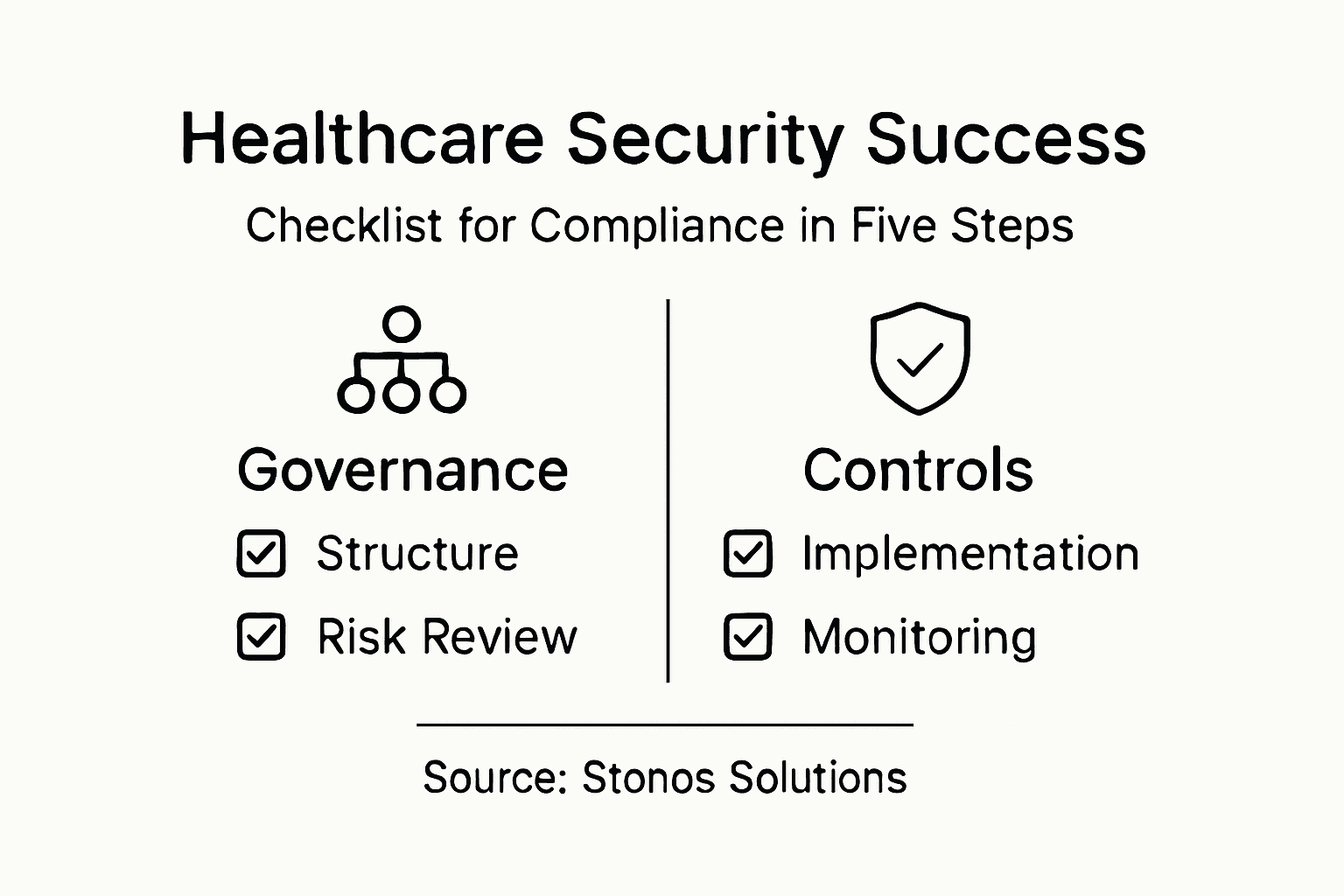
Protecting patient data is more than a legal requirement for American healthcare organizations—it is a business necessity with high stakes for reputation and compliance. As a CISSP-certified security manager, you know that building a robust security governance structure and continuously assessing vulnerabilities create a strong foundation for safeguarding sensitive information. This enterprise security checklist helps align your efforts with HIPAA standards and risk management best practices, supporting confident decision-making across complex healthcare environments.
Table of Contents
- Step 1: Establish Security Governance Structure
- Step 2: Assess Current Security Posture
- Step 3: Implement and Enforce Security Controls
- Step 4: Monitor Systems and Respond to Threats
- Step 5: Audit Compliance and Validate Effectiveness
Quick Summary
| Key Insight | Explanation |
|---|---|
| 1. Establish Security Governance | Create a dedicated team to oversee security and compliance roles for patient data protection. |
| 2. Assess Security Posture | Conduct comprehensive evaluations of administrative, physical, and technical security controls. |
| 3. Implement Robust Controls | Deploy security measures across all domains to safeguard sensitive data effectively. |
| 4. Continuous Monitoring | Develop a proactive system for real-time threat detection and response planning. |
| 5. Perform Regular Audits | Systematically review compliance and effectiveness of security measures for continuous improvement. |
Step 1: Establish Security Governance Structure
Establishing a robust security governance structure forms the critical backbone of healthcare enterprise compliance. This step ensures your organization creates a systematic approach to protecting sensitive patient data and meeting HIPAA security standards.
Successful security governance requires creating a comprehensive framework that defines clear roles, responsibilities, and accountability across your healthcare organization. Start by developing a dedicated security leadership team that includes representatives from key departments such as:
- Information Technology
- Compliance
- Legal
- Human Resources
- Clinical Operations
This cross-functional team will be responsible for developing and implementing security policies, conducting regular risk assessments, and maintaining ongoing compliance with regulatory requirements. Each team member should have well-defined responsibilities and reporting structures that create a transparent chain of accountability.
Here's a summary of governance team roles and their core impact:
| Department | Governance Role Focus | Business Impact |
|---|---|---|
| Information Technology | Cybersecurity operations | Protects data, prevents breaches |
| Compliance | Regulatory alignment | Ensures HIPAA compliance |
| Legal | Policy and liability guidance | Reduces risk exposure |
| Human Resources | Staff training and awareness | Strengthens security culture |
| Clinical Operations | Protects medical workflows | Maintains patient trust |
The most effective governance models integrate security responsibilities into every organizational layer, not just at the leadership level.
Key actions for establishing your security governance structure include:
- Create a formal security policy document
- Define specific security roles and responsibilities
- Establish clear communication channels
- Develop incident response and breach notification protocols
- Implement ongoing training and awareness programs
Pro tip: Conduct annual governance reviews to ensure your security structure remains adaptive and responsive to emerging healthcare technology and regulatory changes.
Step 2: Assess Current Security Posture
Assessing your healthcare organization's current security posture is a critical step in developing a comprehensive compliance strategy. This process involves thoroughly evaluating your existing cybersecurity defenses and identifying potential vulnerabilities that could compromise patient data protection through comprehensive risk assessment techniques.
A comprehensive security posture assessment requires a systematic approach that examines multiple dimensions of your organization's security infrastructure. Begin by conducting a detailed audit across three primary domains:
- Administrative Controls: Policies, procedures, and organizational structures
- Physical Security: Access controls, facility protection, and device management
- Technical Controls: Network security, data encryption, and system configurations
Your assessment should include specific activities to evaluate each domain's effectiveness:
- Review existing security documentation
- Inventory all hardware and software systems
- Identify potential data access points and transmission channels
- Evaluate current security training programs
- Analyze historical security incident reports
A thorough security posture assessment is not a one-time event but a continuous process of evaluation and improvement.
Key stakeholders from IT, compliance, and clinical departments should collaborate during this assessment, ensuring a holistic understanding of your organization's security landscape. Document all findings meticulously, creating a baseline for future improvements and regulatory compliance.
Pro tip: Consider engaging external cybersecurity experts to provide an unbiased, comprehensive assessment of your security infrastructure and identify blind spots internal teams might miss.
Step 3: Implement and Enforce Security Controls
Implementing and enforcing robust security controls is crucial for protecting sensitive healthcare information and maintaining HIPAA compliance. This step transforms your risk assessment insights into actionable security safeguards across administrative, physical, and technical domains.

Successful implementation requires a comprehensive approach that addresses multiple layers of organizational security. Focus on developing and deploying controls across key areas:
Compare the three security control domains and what they safeguard:
| Domain | Primary Safeguard | Typical Technologies |
|---|---|---|
| Administrative | Policy enforcement | Documentation, training tools |
| Physical | Facility and device access | Badges, secured storage |
| Technical | Data and network | Firewalls, encryption systems |
- Access Management: Implement strict user authentication and authorization protocols
- Data Encryption: Secure data at rest and in transit
- Network Protection: Deploy firewalls, intrusion detection systems
- Audit Logging: Create comprehensive tracking mechanisms
- Incident Response: Develop clear protocols for security breaches
Your security control implementation should follow these critical steps:
- Develop detailed security policies
- Configure technical security mechanisms
- Train staff on security protocols
- Establish monitoring systems
- Create continuous improvement processes
Security controls are not a one-time installation but an ongoing, dynamic process of protection and adaptation.
Key considerations include aligning your controls with specific organizational risks, ensuring scalability, and maintaining flexibility to address emerging threats. Regular testing and validation of these controls will help identify potential vulnerabilities and strengthen your overall security posture.
Pro tip: Conduct quarterly tabletop exercises to simulate security incidents and validate the effectiveness of your implemented controls, ensuring your team remains prepared and responsive.
Step 4: Monitor Systems and Respond to Threats
Effective system monitoring and threat response are critical for maintaining healthcare cybersecurity and protecting sensitive patient information. This step focuses on developing a proactive approach to continuous security monitoring and incident management.
Successful threat monitoring requires implementing a comprehensive strategy that integrates multiple defensive layers and rapid response mechanisms. Your monitoring approach should encompass several key components:
- Real-time Network Surveillance: Continuous tracking of system activities
- Threat Intelligence Gathering: Monitoring emerging cybersecurity risks
- Anomaly Detection: Identifying unusual system behaviors
- Security Information Management: Centralized log analysis
- Rapid Incident Response: Predefined protocols for addressing potential breaches
Develop a structured monitoring and response workflow through these essential steps:
- Configure advanced monitoring tools
- Establish baseline system performance metrics
- Create automated alert mechanisms
- Develop comprehensive incident response playbooks
- Conduct regular vulnerability assessments
Effective threat monitoring transforms reactive defense into proactive risk management.
Key considerations include maintaining transparent communication channels, ensuring rapid escalation procedures, and developing adaptable response strategies. Your monitoring system should provide comprehensive visibility while remaining agile enough to address evolving cybersecurity landscapes.
Pro tip: Implement a cross-functional incident response team that includes IT, legal, and clinical representatives to ensure comprehensive and coordinated threat management.
Step 5: Audit Compliance and Validate Effectiveness
Auditing compliance and validating the effectiveness of your healthcare security program are critical steps in maintaining robust regulatory adherence and protecting patient information. This process involves systematically evaluating organizational security controls and policy implementation.
A comprehensive compliance audit requires a structured approach that examines multiple dimensions of your security infrastructure. Your audit should focus on key areas that demonstrate regulatory alignment and operational excellence:
- Policy Review: Assess current security documentation
- Control Verification: Test implemented security mechanisms
- Training Effectiveness: Evaluate staff understanding
- Incident Response: Analyze past breach management
- Risk Management: Validate ongoing risk mitigation strategies
Develop a robust audit process through these systematic steps:
- Develop comprehensive audit checklists
- Schedule periodic independent assessments
- Collect and analyze performance metrics
- Document audit findings thoroughly
- Create remediation plans for identified gaps
Effective compliance audits transform regulatory requirements from bureaucratic exercises into meaningful organizational improvements.
Ensure your audit process remains dynamic and forward-looking, focusing not just on identifying problems but on creating actionable pathways for continuous improvement. Engage stakeholders across departments to create a collaborative and transparent audit environment.
Pro tip: Rotate audit team members and perspectives to prevent complacency and ensure fresh, unbiased insights into your compliance framework.
Strengthen Your Healthcare Security with Expert Support from Stonos Solutions
The challenge of maintaining enterprise security in healthcare demands a clear governance structure, thorough risk assessment, and continuous monitoring to protect sensitive patient data and ensure HIPAA compliance. If you face difficulties establishing effective security controls or need to validate your compliance efforts, you are not alone. Many organizations struggle with transforming risk assessments into actionable safeguards and maintaining ongoing threat detection and response.
Stonos Solutions specializes in delivering tailored cybersecurity consulting that addresses these exact pain points with proven strategies including comprehensive security assessments, vulnerability analyses, and regulatory compliance support. Our expertise in frameworks like HIPAA and risk management helps transform your security posture into an adaptive, compliant, and resilient system. Benefit from our team’s certifications in CISSP and PMP to optimize your security policies, implement advanced controls, and fine-tune incident response protocols.
Take the next step to secure your healthcare enterprise today. Visit Stonos Solutions to explore how our penetration testing, risk management strategies, and custom consulting services can help you meet healthcare compliance and protect your critical assets. Don’t wait for a breach to take action—partner with us now to build a trustworthy security framework that supports your organizational goals. Learn more about our holistic security approach at https://stonossolutions.com.
Frequently Asked Questions
What are the key components of an Enterprise Security Checklist for Healthcare Compliance?
Develop an Enterprise Security Checklist that includes a security governance structure, a current security posture assessment, robust security controls, continuous system monitoring, and regular compliance audits. Begin by outlining the specific responsibilities of your security team within the first 30 days.
How often should we conduct a security posture assessment in our healthcare organization?
Conduct a security posture assessment at least once a year, or more frequently if there are significant changes in your systems or threat landscape. This will help you identify vulnerabilities and adjust your security measures accordingly.
What steps should I take to implement security controls effectively?
To implement security controls effectively, begin by developing clear security policies and training staff on these protocols. Aim to complete initial training sessions within 60 days to ensure all employees understand their roles in maintaining security.
How can we ensure ongoing compliance with HIPAA security standards?
Establish an annual audit schedule that reviews and validates the effectiveness of your security measures and training programs. Make compliance a continuous process by creating a remediation plan for any gaps identified during these audits.
What is the best way to monitor our systems and respond to potential threats?
Implement a monitoring system that uses real-time surveillance and anomaly detection tools to identify unusual activities. Select and configure your monitoring tools within 90 days to ensure you have effective and proactive threat management in place.
Why is staff training an essential part of security compliance?
Staff training is vital because employees are often the first line of defense against security breaches. Conduct regular training sessions and assessments to reinforce security protocols, aiming for at least biannual training updates to maintain a strong security culture.
Recommended
- How to Conduct Security Risk Assessment for HIPAA Compliance - Stonos Solutions Blog
- Top 7 Penetration Testing Tools for Small Business 2026 - Stonos Solutions Blog
- Services for End Users - Stonos Solutions
- Security Consulting for Integrators: Enabling Resilience - Stonos Solutions Blog
- AI Awareness Training for employees | Artificial Intelligence
Louis Romano
Need Security Consulting?
Our expert team is ready to help you enhance your security posture.
Contact Us Today Download Capability StatementRelated Articles
Security gap analysis: steps, benefits, and best practices
Learn how to conduct a security gap analysis to identify hidden risks, close compliance gaps, and build a stronger security posture in regulated industries.
Read More7 Key Benefits of Penetration Testing for Healthcare IT
Discover 7 essential benefits of penetration testing for healthcare IT security managers and learn actionable strategies to protect data and ensure compliance.
Read More7 Key Types of Cybersecurity Assessments for Healthcare
Learn about 7 essential types of cybersecurity assessments for healthcare organizations and get actionable tips to boost compliance and security.
Read More