Why Custom Security Solutions Matter for Healthcare
Why Custom Security Solutions Matter for Healthcare

Healthcare security managers know the challenge is more than just patching systems and following checklists. Rising cyber threats combined with strict regulations like HIPAA mean generic protections rarely fit the demands of modern medical environments. Custom security solutions deliver targeted tools, from advanced encryption to AI-driven threat detection, that go beyond standard frameworks and directly support both regulatory compliance and real-world vulnerability management across American healthcare organizations.
Table of Contents
- Defining Custom Security Solutions In Healthcare
- Types Of Custom Security Measures And Applications
- Key Features For Regulatory Compliance Requirements
- Addressing Healthcare-Specific Threats And Vulnerabilities
- Cost Implications And Risk Reduction Benefits
- Comparisons With Standard And Non-Customized Options
Key Takeaways
| Point | Details |
|---|---|
| Custom Security Solutions | Tailored security measures are essential for addressing unique vulnerabilities in healthcare environments. |
| Regulatory Compliance | Comprehensive strategies must align with HIPAA and GDPR to protect patient data effectively. |
| Proactive Threat Management | Implement real-time monitoring and adaptive response systems to stay ahead of evolving cybersecurity threats. |
| Cost-Benefit Analysis | Custom solutions should be viewed as strategic investments that mitigate financial and reputational risks in the long term. |
Defining custom security solutions in healthcare
Healthcare organizations face increasingly complex cybersecurity challenges that demand sophisticated, tailored protection strategies. Custom security solutions are specialized approaches designed to address the unique vulnerabilities and regulatory requirements inherent in medical technology environments. These solutions go far beyond generic security frameworks, offering targeted protection for sensitive patient data and critical healthcare infrastructure.
Custom security solutions in healthcare specifically involve advanced technological integration that addresses the sector's distinctive privacy and infrastructure protection demands. Key characteristics of these solutions include:
- Targeted threat detection mechanisms
- HIPAA and GDPR compliance frameworks
- Advanced encryption for patient records
- Specialized access control protocols
- Real-time monitoring and incident response capabilities
The complexity of healthcare security requires a multifaceted approach that considers technological, regulatory, and operational dimensions. Comprehensive health data protection strategies must incorporate cryptographic techniques, robust policy frameworks, and adaptive security infrastructure that can respond dynamically to emerging cyber threats.
Pro tip: Conduct a comprehensive security assessment annually to ensure your custom solution remains aligned with evolving healthcare technology and regulatory landscapes.
Types of custom security measures and applications
Healthcare organizations require sophisticated and adaptive security measures that can protect complex digital ecosystems. Custom security solutions encompass a diverse range of technological interventions designed to address the unique vulnerabilities inherent in medical technology environments. These specialized approaches go beyond traditional cybersecurity frameworks, offering nuanced protection for sensitive patient information and critical healthcare infrastructure.
Advanced technological applications in healthcare security include comprehensive strategies targeting multiple system components:
- Encryption methods for data at rest and in transit
- Access control systems with multi-factor authentication
- AI-powered anomaly detection algorithms
- Secure application programming interfaces (APIs)
- Comprehensive device protection mechanisms
- Network segmentation and isolation protocols
Healthcare security requires intricate, multi-layered approaches that adapt to evolving technological landscapes. Machine learning-based authentication represents a cutting-edge strategy for verifying user identities and detecting potential unauthorized access attempts. These intelligent systems analyze multiple behavioral and contextual signals to create dynamic, responsive security environments that can instantly recognize and mitigate potential threats.
Effective custom security solutions transform potential vulnerabilities into robust, intelligent defense mechanisms that protect patient data and organizational integrity.
Pro tip: Implement a continuous monitoring and assessment strategy that regularly evaluates your security infrastructure's effectiveness and adapts to emerging technological threats.
Key features for regulatory compliance requirements
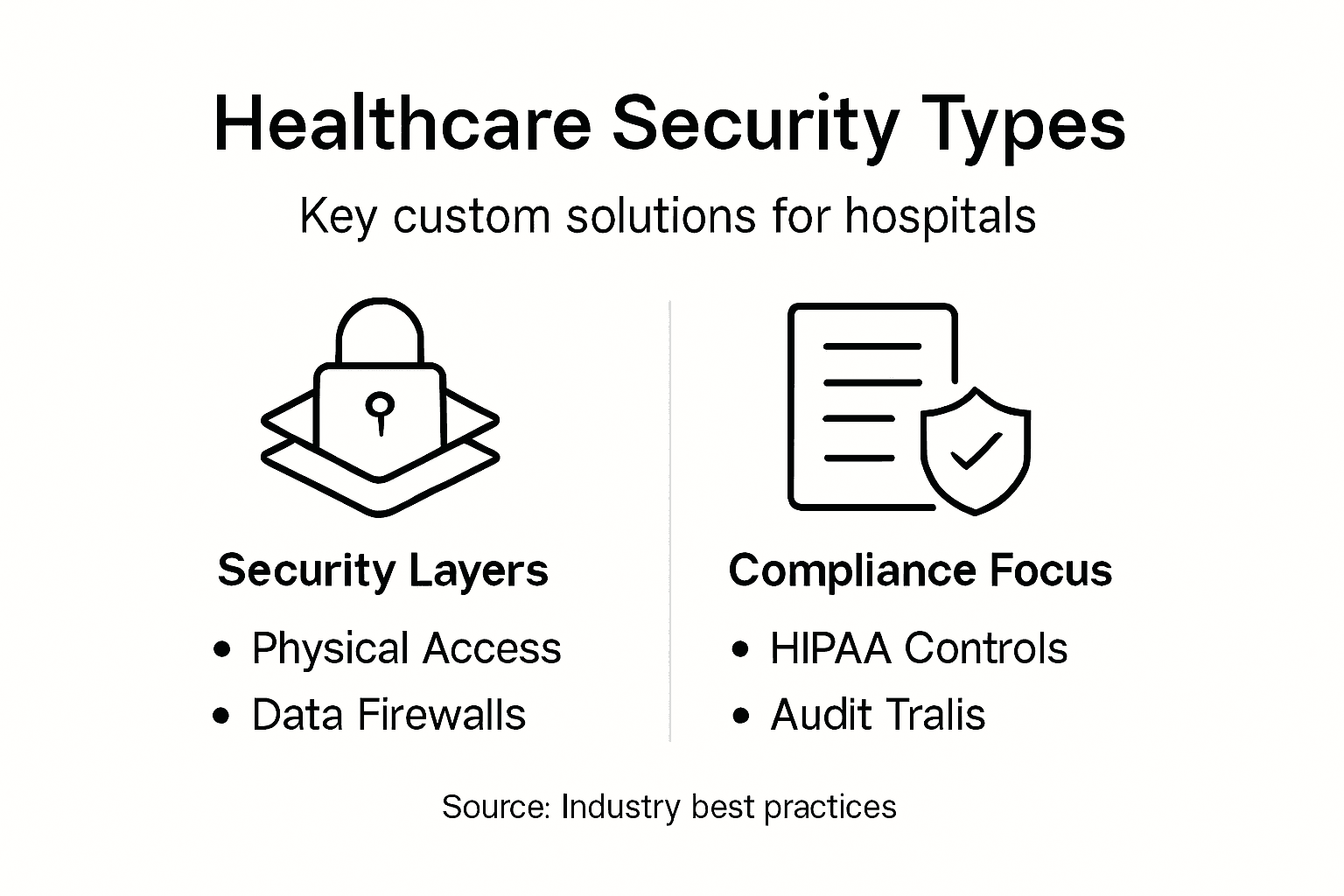
Healthcare organizations must navigate a complex landscape of regulatory requirements that demand sophisticated security approaches. Regulatory compliance represents a critical cornerstone of modern healthcare security, requiring comprehensive strategies that protect patient data while maintaining operational efficiency. These requirements extend far beyond simple checkbox exercises, demanding intricate, dynamic security frameworks that adapt to evolving legal and technological landscapes.
Healthcare data protection standards necessitate multiple critical features across healthcare security infrastructure:
- Robust access control mechanisms
- Advanced encryption protocols
- Comprehensive audit trail documentation
- Patient data anonymization techniques
- Real-time incident response capabilities
- Secure user authentication systems
- Continuous compliance monitoring
The most effective regulatory compliance strategies integrate multiple layers of protection. Secure authentication protocols play a crucial role in ensuring that only authorized personnel can access sensitive medical information. These systems must balance stringent security requirements with the need for seamless healthcare delivery, creating intelligent frameworks that protect patient data without impeding critical medical workflows.
Regulatory compliance is not just about meeting minimum standards, but about creating a comprehensive security ecosystem that proactively protects patient information and organizational integrity.
Pro tip: Develop a cross-functional compliance team that includes IT security, legal, and medical professionals to create a holistic approach to regulatory requirements.
Addressing healthcare-specific threats and vulnerabilities
Healthcare organizations face a unique and increasingly complex cybersecurity landscape that demands specialized protection strategies. Cybersecurity threats in medical environments are not just technical challenges, but potential risks that could directly impact patient safety, operational continuity, and institutional reputation. These sophisticated threats require equally advanced, tailored security solutions that understand the intricate nuances of healthcare technology ecosystems.
Healthcare cybersecurity vulnerabilities encompass multiple critical threat vectors:
- Ransomware targeting hospital systems
- Phishing attacks exploiting medical staff credentials
- Insider threat risks from personnel access
- Medical device and IoMT system vulnerabilities
- Network endpoint security challenges
- Patient data breach potential
- Telemedicine platform security gaps
The most effective defense strategies leverage intelligent, adaptive technologies that can anticipate and neutralize emerging threats. Algorithmic cybersecurity frameworks enable healthcare organizations to implement proactive threat intelligence mechanisms that continuously monitor, detect, and respond to potential security incidents. These advanced systems go beyond traditional static defense models, creating dynamic protection environments that can rapidly adapt to the evolving threat landscape.
Effective healthcare cybersecurity is not about building impenetrable walls, but creating intelligent, responsive defense mechanisms that protect patient data and organizational integrity.
Pro tip: Conduct regular comprehensive security assessments that simulate real-world attack scenarios to identify and address potential vulnerabilities before they can be exploited.
Cost implications and risk reduction benefits
Healthcare organizations must carefully evaluate the financial landscape of cybersecurity investments, understanding that custom security solutions represent a strategic approach to managing technological risks. The initial investment in specialized security infrastructure may appear substantial, but the long-term financial protection far outweighs the upfront costs. Proactive security measures can prevent potentially catastrophic financial and reputational damages that could arise from comprehensive data breaches.
Healthcare cybersecurity investments demonstrate significant risk reduction benefits through multiple financial dimensions:
- Prevention of costly data breach incidents
- Reduction of regulatory compliance penalties
- Minimization of operational disruption expenses
- Protection of institutional reputation
- Preservation of patient trust
- Avoidance of potential legal liabilities
- Long-term cost savings through strategic risk management
Risk mitigation strategies transform cybersecurity from a pure cost center into a strategic investment. Advanced security frameworks enable healthcare organizations to create resilient technological environments that not only protect sensitive information but also optimize operational efficiency. By implementing intelligent, adaptive security solutions, institutions can significantly reduce the financial exposure associated with potential cyber incidents.
Here’s how healthcare security investments deliver business value:
| Benefit Area | Financial Impact | Strategic Outcome |
|---|---|---|
| Breach Prevention | Avoids large fines | Maintains patient trust |
| Compliance | Reduces penalty risk | Enables safe expansion |
| Operational Continuity | Prevents downtime | Sustains care delivery |
| Reputation | Safeguards public image | Attracts new patients |
Custom security solutions are not expenses, but critical investments in organizational resilience and patient safety.
Pro tip: Develop a comprehensive cost-benefit analysis that quantifies potential risk scenarios and demonstrates the financial value of proactive security investments.
Comparisons with standard and non-customized options
Healthcare organizations face a critical decision when selecting cybersecurity strategies, with custom security solutions representing a sophisticated alternative to generic, one-size-fits-all approaches. Standard security frameworks often fail to address the unique complexities and nuanced vulnerabilities inherent in medical technology environments. The limitations of non-customized options can create significant gaps in protection that potentially compromise patient data and institutional security.
Healthcare security architecture reveals fundamental differences between customized and standard security solutions:
- Granular threat protection capabilities
- Precise regulatory compliance alignment
- Adaptability to specific operational workflows
- Seamless integration with existing infrastructure
- Dynamic response to emerging technological risks
- Enhanced data privacy mechanisms
- Reduced potential for systemic vulnerabilities
Advanced security integration strategies demonstrate that customized solutions provide significantly more robust protection compared to standardized tools. These tailored approaches accommodate the intricate requirements of healthcare delivery, offering flexible frameworks that can rapidly adapt to changing technological landscapes and evolving regulatory environments. Non-customized options often create rigid security structures that cannot effectively respond to the dynamic challenges facing modern healthcare institutions.
Here's a quick comparison of custom vs. standard security solutions in healthcare:
| Aspect | Custom Solution | Standard Solution |
|---|---|---|
| Adaptability | Adjusts to evolving risks | Limited updates |
| Regulatory Alignment | Designed for compliance | Generic legal coverage |
| Workflow Integration | Seamless with medical tech | May disrupt operations |
| Threat Response | Proactive, dynamic defense | Reactive only |
| Data Privacy | Enhanced protection | Basic mechanisms |
Effective security is not about universal solutions, but about understanding and addressing unique institutional vulnerabilities.
Pro tip: Conduct a comprehensive gap analysis comparing your current security infrastructure against specialized healthcare cybersecurity standards to identify potential customization opportunities.
Strengthen Your Healthcare Security with Custom Solutions from Stonos Solutions
Healthcare organizations face unique and evolving cybersecurity challenges that demand tailored strategies designed to protect sensitive patient data and ensure regulatory compliance. If you are concerned about guarding against ransomware attacks, insider threats, or meeting HIPAA and other compliance requirements, custom security solutions are essential to build a resilient defense that adapts to your specific environment and operational workflows. Key concepts like advanced encryption, real-time monitoring, and specialized access controls must be implemented thoughtfully to secure your infrastructure without disrupting care delivery.
Stonos Solutions specializes in delivering comprehensive security assessments, penetration testing, and regulatory compliance support specifically designed for the healthcare industry. Our expert consulting services include risk management strategies and system design that align with standards such as HIPAA, NIST, and FISMA. We understand the critical importance of protecting patient data while maintaining operational continuity and can help you reduce risks with intelligent, adaptive security frameworks.
Ready to transform your cybersecurity posture and safeguard your healthcare organization today?
Discover how Stonos Solutions can design and implement a custom security program that meets your evolving needs. Don’t wait for threats to become breaches. Visit Stonos Solutions now and secure your future with expert healthcare cybersecurity support.
Frequently Asked Questions
What are custom security solutions in healthcare?
Custom security solutions in healthcare are specialized cybersecurity strategies tailored to address the unique vulnerabilities and regulatory requirements of medical technology environments, providing targeted protection for sensitive patient information and healthcare infrastructure.
Why are regulatory compliance features important in healthcare security?
Regulatory compliance features in healthcare security are vital to ensure that organizations meet stringent legal standards, such as HIPAA and GDPR, while securely protecting patient data and maintaining operational efficiency.
How do custom security solutions differ from standard security frameworks?
Custom security solutions offer granular threat protection, precise regulatory compliance, and adaptability to specific operational workflows, while standard frameworks may provide generic, one-size-fits-all protection that does not address unique healthcare challenges effectively.
What are some examples of advanced technological applications in healthcare security?
Examples of advanced technological applications in healthcare security include encryption methods, multi-factor authentication systems, AI-powered anomaly detection, secure APIs, and network segmentation to protect against cybersecurity threats.
Recommended
- How to Conduct Security Risk Assessment for HIPAA Compliance - Stonos Solutions Blog
- Services for End Users - Stonos Solutions
- Top 7 Penetration Testing Tools for Small Business 2026 - Stonos Solutions Blog
- Security Consulting for Integrators: Enabling Resilience - Stonos Solutions Blog
- Top Security Best Practices for Managed Email Platforms – Atriomail
- Transformation digitale en santé | Yelido
- Cybersecurity for Insurers, tools and best practices - Digital Insurance Platform | IBSuite Insurance Software | Modern Insurance System
Louis Romano
Need Security Consulting?
Our expert team is ready to help you enhance your security posture.
Contact Us Today Download Capability StatementRelated Articles
Security gap analysis: steps, benefits, and best practices
Learn how to conduct a security gap analysis to identify hidden risks, close compliance gaps, and build a stronger security posture in regulated industries.
Read MoreEnterprise Security Checklist for Healthcare Compliance Success
Explore an actionable enterprise security checklist tailored for healthcare organizations. Follow a step-by-step process to ensure HIPAA compliance and risk management.
Read More7 Key Types of Cybersecurity Assessments for Healthcare
Learn about 7 essential types of cybersecurity assessments for healthcare organizations and get actionable tips to boost compliance and security.
Read More