Why Cybersecurity for Manufacturing Matters Most
Why Cybersecurity for Manufacturing Matters Most
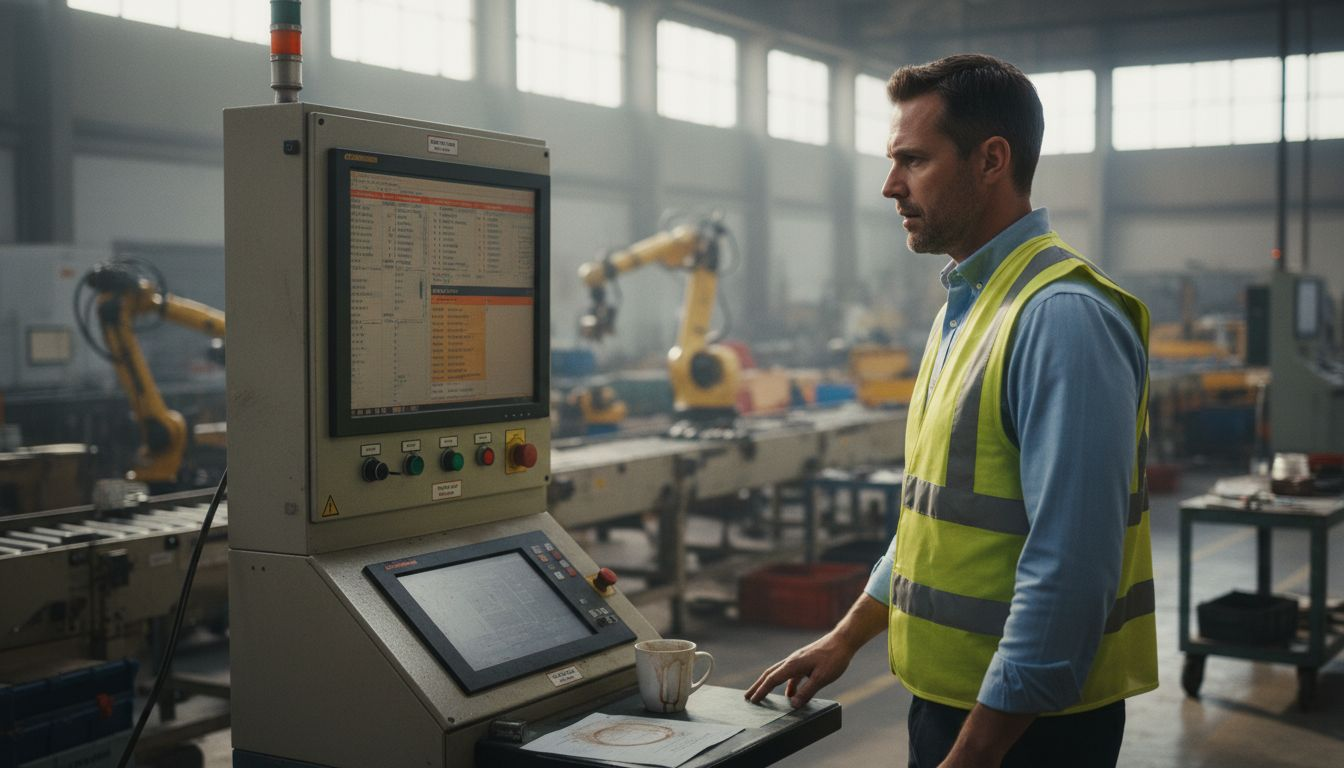
Protecting your manufacturing facility means tackling risks far beyond basic office security. The blend of interconnected production systems, persistent data flow, and the physical impact of cyber threats separates manufacturing from every other environment. As you juggle NIST compliance and secure operational technology, understanding how Industry 4.0 innovations expand vulnerabilities becomes vital. This guide delivers practical insights to help you address security gaps unique to American manufacturers and safeguard both your operations and compliance standing.
Table of Contents
- Cybersecurity In Manufacturing Environments Explained
- Types Of Cyber Threats Facing Factories
- Operational Technology Vulnerabilities And Risks
- Legal And Compliance Demands For Manufacturers
- Strategies For Managing Cybersecurity Threats
Key Takeaways
| Point | Details |
|---|---|
| Unique Cybersecurity Needs | Manufacturing environments require tailored cybersecurity strategies due to the interconnected nature of operational technology and production systems. |
| Physical Consequences of Breaches | Cyber incidents in manufacturing can lead to significant physical damages, operational disruptions, and safety risks, highlighting the importance of robust defenses. |
| Vendor Management is Crucial | Manufacturers must implement stringent compliance and security measures across their supply chains to mitigate risks from third-party vulnerabilities. |
| Operational Resilience is Essential | Developing operational resilience helps ensure continuity of manufacturing processes even during cyber incidents, requiring documented procedures and backup systems. |
Cybersecurity in Manufacturing Environments Explained
Manufacturing facilities operate differently from traditional office environments, and that difference matters enormously for cybersecurity. Your production lines, supply chain networks, and operational technology systems face a unique combination of threats that generic security approaches simply don't address. The core challenge stems from how modern manufacturing relies on interconnected systems: when you deploy Industry 4.0 technologies like IoT devices, cloud platforms, and automated systems, you expand your attack surface dramatically. Unlike a traditional IT network where systems can be isolated, manufacturing environments require constant data flow between machines, control systems, and business networks. Research on cybersecurity in manufacturing demonstrates that this interconnected approach creates exponentially more vulnerability points than older, standalone production systems.
What makes manufacturing cybersecurity distinct is the physical consequence of failure. A data breach in your finance department is serious. A breach in your production control system can halt manufacturing, damage equipment, endanger workers, and compromise product quality in ways that ripple through your entire supply chain. Your operational technology (OT) systems control physical processes, which means attackers can cause tangible damage beyond data theft. They can alter production parameters, disable safety systems, or introduce defects into products heading to customers. This reality fundamentally changes how you should approach cybersecurity. You can't simply deploy the same solutions you'd use in a corporate office. Your strategy must account for the reality that downtime in manufacturing isn't just lost revenue; it's a cascade of consequences affecting inventory, contracts, customer relationships, and sometimes worker safety.
The convergence of IT and OT systems amplifies these risks further. Traditional manufacturing operated with isolated control systems that rarely connected to external networks. Modern facilities integrate these systems for efficiency: production data feeds into business analytics, maintenance alerts trigger inventory orders, and remote monitoring enables predictive maintenance. This integration creates operational benefits, but it also means vulnerabilities in your business network can compromise production systems, and vulnerabilities in production systems can expose sensitive business data. NIST compliance standards recognize this reality by requiring specific controls for industrial systems, but implementing those controls requires understanding how your manufacturing environment differs from traditional enterprise networks. Your cybersecurity manager must navigate compliance requirements while protecting systems that were never designed with today's attack vectors in mind.
When you evaluate your manufacturing cybersecurity posture, focus on three practical areas: first, inventory your OT systems and understand how they connect to your IT infrastructure; second, identify which systems require the most protection based on their impact on production and safety; third, develop controls that work within manufacturing constraints (you can't simply take production systems offline for patching like you would office computers). This foundational understanding shapes every decision you make about assessments, monitoring, and incident response in your facility.
Here is a comparison of cybersecurity challenges in manufacturing versus traditional office environments:
| Aspect | Manufacturing Environments | Office IT Environments |
|---|---|---|
| Key Assets | OT systems and production lines | Business data and user workstations |
| Downtime Impact | Halts production, risks safety | Reduces productivity, risks data loss |
| Connectivity | Persistent integration of machines and networks | Can isolate systems easily |
| Main Threats | Physical sabotage, ransomware, supply chain | Data theft, phishing, malware |
| Security Constraints | Patching downtime costly | Scheduled downtime feasible |
Pro tip: Start your cybersecurity assessment by mapping your operational technology network separately from IT—ask your production team which systems would cause the most damage if compromised, then prioritize protection around those critical assets.
Types of Cyber Threats Facing Factories
Your manufacturing facility faces a distinct collection of cyber threats that differ significantly from what traditional businesses encounter. The attackers targeting factories aren't just after financial data or customer information; they're after your production capacity, product specifications, and operational continuity. Understanding the specific threat types helps you build defenses that actually work in your environment. Manufacturing cyber threats span multiple categories, each requiring different detection and response strategies. Malware remains a persistent danger, often delivered through email attachments, USB devices, or compromised supplier software. Once inside your network, malware can disable safety systems, alter production parameters, or encrypt critical files to extort ransom payments. Ransomware attacks specifically target factories because production downtime creates urgent pressure to pay quickly. Attackers know that shutting down a production line costs thousands per hour, making a few hundred thousand in ransom feel like a bargain to desperate manufacturers.
Denial-of-service attacks represent another significant category. These attacks flood your network or specific systems with traffic, rendering them unable to respond to legitimate requests. In manufacturing, a DDoS attack against your production control network could halt operations without compromising any systems or stealing data. Supply chain attacks deserve particular attention from your perspective. Attackers recognize that infiltrating a small supplier gives them access to multiple manufacturers. They might compromise the software your equipment vendor provides, or they might breach a component supplier and introduce malicious code into parts you install on your assembly line. Insider threats complete the picture. Disgruntled employees, contractors with access to sensitive systems, or individuals bribed by competitors can cause damage that external attackers struggle to achieve. An insider knows exactly which systems matter most and often bypasses security controls because they have legitimate access credentials.
The convergence of these threats creates a complex security challenge. An attacker might use a supply chain compromise to establish initial access, then deploy malware that spreads across your network, and finally use insider knowledge to disable your backup systems before launching a ransomware attack. This layered approach means your defenses must account for multiple threat vectors simultaneously. Your facility likely faces nation-state actors seeking intellectual property, criminal organizations pursuing ransomware payments, competitors collecting trade secrets, and opportunistic attackers testing your defenses for weaknesses. Each threat type requires different detection methods, response procedures, and prevention strategies. Industrial control systems running outdated software without security patches become attractive targets because attackers know those vulnerabilities often remain unpatched for years. The combination of legacy equipment, production constraints that prevent system shutdowns, and limited security expertise in manufacturing environments creates an environment where threats flourish.
Summary of the main cyber threats targeting manufacturing facilities:
| Threat Type | Attack Vector | Potential Impact |
|---|---|---|
| Malware | Email, USB, supplier software | Disables safety systems, extorts ransom |
| Ransomware | Phishing, lateral movement | Shuts down production lines |
| DDoS | Network flooding | Halts control networks, stops operations |
| Supply Chain | Compromised vendors | Spreads to production, product defects |
| Insider Threats | Legitimate access abuse | Bypasses controls, targeted sabotage |
Pro tip: Conduct a threat modeling session with your IT team, production supervisors, and plant engineers to identify which specific threat types pose the greatest risk to your facility, then allocate defensive resources accordingly rather than spreading security efforts too thin.
Operational Technology Vulnerabilities and Risks
Your operational technology systems represent the crown jewels of your manufacturing facility, and they're fundamentally different from the IT infrastructure that supports your business operations. OT systems control physical processes, machinery, and production workflows that have often run unchanged for decades. This longevity creates a unique vulnerability problem. Legacy industrial control systems were designed when network security wasn't a consideration. They run on proprietary operating systems with minimal security features, often lack built-in encryption, and were never intended to connect to external networks or receive frequent security updates. Patching these systems requires lengthy validation processes to ensure updates don't disrupt critical production. Legacy system weaknesses in industrial environments create attractive targets because attackers know vulnerabilities may persist for years without remediation. Your facility likely operates equipment manufactured in the 1990s and 2000s alongside newer connected devices, creating a patchwork environment where security standards vary dramatically.

The expansion of IoT devices compounds this vulnerability significantly. Modern manufacturing adds sensors, monitoring devices, and connected equipment to improve efficiency and collect production data. Each connected device represents a potential entry point into your network. Many manufacturers deploy IoT devices without proper security configurations because the focus is on getting production benefits quickly. These devices often ship with default credentials, no encryption, and automatic network discovery that makes them broadcast their presence to any potential attacker listening on your network. When attackers compromise an IoT sensor, they gain a foothold inside your facility's network. From there, they can move laterally toward more critical systems like programmable logic controllers or human machine interfaces that directly control production. Your IT team might monitor corporate network security closely, but those same security controls often don't extend to the production floor where OT systems operate.
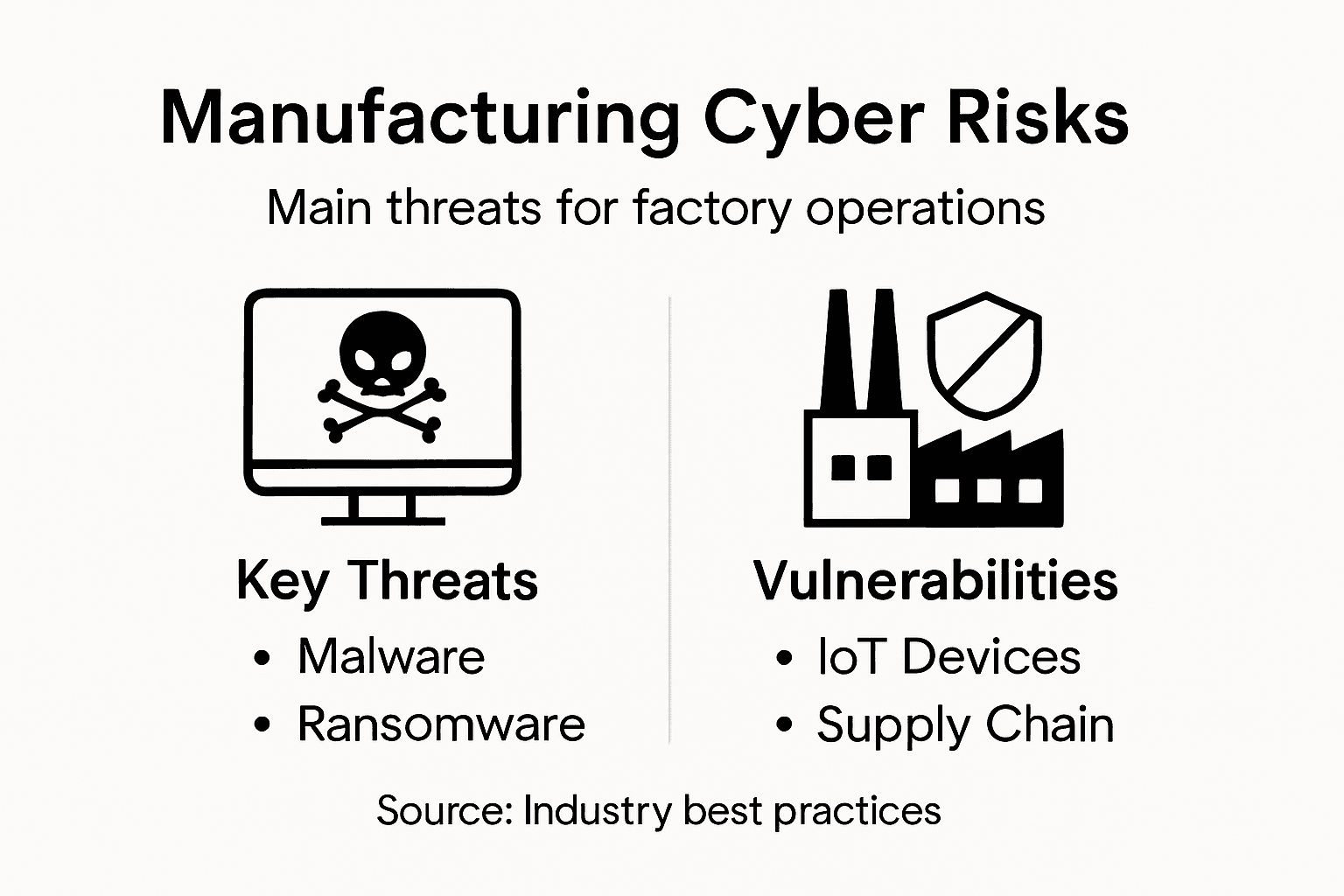
Supply chain vulnerabilities add another critical dimension to OT risk. Your manufacturing equipment comes from vendors around the world, and each supplier represents a potential vulnerability vector. Attackers can compromise software updates from equipment vendors, inject malicious code into firmware, or breach component suppliers and introduce compromised parts into equipment you install. Once installed, these compromised systems become part of your trusted infrastructure. You face the added challenge that your equipment vendors may lack security expertise comparable to software companies, creating vulnerabilities that persist longer than you might expect. Additionally, ransomware targeting production systems has become increasingly sophisticated. Attackers understand that disrupting production creates immediate financial pressure to pay ransom demands. They specifically target OT networks knowing that production downtime carries urgent consequences your executives will understand immediately.
Pro tip: Work with your equipment vendors and system integrators to develop a hardware and software inventory of your OT environment, including version numbers and last update dates; this inventory becomes the foundation for identifying which systems pose the greatest risk and require immediate attention.
Legal and Compliance Demands for Manufacturers
Manufacturing companies operate in a regulatory environment that grows more complex each year. Unlike many industries where compliance focuses on data protection, manufacturers must address cybersecurity requirements that span multiple frameworks simultaneously. NIST cybersecurity standards represent the foundation most United States manufacturers must address, particularly if you work with government contractors or handle sensitive information. NIST requires specific security controls across identification and authentication, access control, system development and maintenance, and incident response. However, NIST is just the beginning. Depending on your facility's location and customer base, you may also face HIPAA requirements if you produce medical devices, PCI DSS standards if you handle payment information, and FISMA compliance if you contract with federal agencies. International operations add another layer. European manufacturers must comply with GDPR and NIS2 directive requirements, while companies serving Asian markets navigate region-specific regulations. Evolving global cybersecurity regulations create a complex compliance landscape where a single unified approach rarely works across all jurisdictions.
The compliance challenge deepens when you consider supply chain accountability. Regulators increasingly hold manufacturers responsible for the security practices of their suppliers and vendors. If a component supplier suffers a breach that compromises your manufacturing process, regulators may hold you liable for inadequate vendor management despite the breach occurring outside your direct control. This means your compliance program must extend beyond your facility walls to include vendor risk assessments, contractual security requirements, and ongoing monitoring of third-party security posture. You must evaluate whether vendors maintain adequate security controls, conduct regular security assessments, and have incident response plans. Documentation becomes critical. Regulators expect you to maintain records demonstrating that you actively managed supply chain risks rather than simply trusting vendors to handle security independently. Many manufacturers underestimate the scope of this requirement until an audit reveals gaps in their vendor oversight.
Reporting obligations represent another compliance demand that catches many manufacturers unprepared. When a cybersecurity incident occurs, regulatory requirements often mandate notification to affected parties, government agencies, or law enforcement within specific timeframes. These timeframes are frequently measured in days, not weeks. Your incident response plan must account for these reporting deadlines and include clear procedures for determining what constitutes a reportable incident, who makes notification decisions, and how you document compliance with reporting requirements. Different regulations have different thresholds and timelines. A breach affecting 10 customers might trigger HIPAA notification requirements but not GDPR obligations, or vice versa. Your legal team must work closely with your cybersecurity team to ensure incident response procedures align with regulatory requirements.
Cross-border operations amplify compliance complexity. If your manufacturing facility operates in multiple countries or sells products internationally, you must comply with regulations in each jurisdiction where you operate. A data breach at your United States facility may trigger GDPR obligations if you process data about European customers or employees. Conversely, a European facility breach may trigger United States regulatory requirements if you handle American customer information. Building a compliance program that addresses this complexity requires documented governance structures, clear accountability, and regular compliance assessments across all operating locations.
Pro tip: Establish a compliance calendar that maps every regulation applicable to your facility, identifies renewal dates for certifications, and assigns accountability for each compliance area; this prevents critical deadlines from being missed while ensuring your cybersecurity investments align with actual legal requirements rather than perceived obligations.
Strategies for Managing Cybersecurity Threats
Managing cybersecurity threats in manufacturing requires a fundamentally different approach than traditional corporate security. Your strategy must balance protection with operational reality. You cannot simply shut down systems for security updates or isolate production networks from business systems without compromising efficiency. Effective threat management starts with understanding that cybersecurity is not purely a technical problem. It requires coordination between your IT department, production teams, plant engineers, and executive leadership. Each group brings different perspectives and constraints. Your IT team understands network security principles. Your production supervisors understand what happens when systems go down. Your plant engineers understand equipment capabilities and limitations. Your executives understand financial constraints and risk tolerance. Building a management strategy that integrates these perspectives prevents misaligned security decisions that look good on paper but fail in practice.
Operational resilience forms the foundation of effective threat management. Enhanced operational resilience through cybersecurity governance means building systems and processes that continue functioning even when attacked. This includes redundancy in critical systems, backup power supplies for essential equipment, and documented procedures for manual operations if automated systems fail. Your facility should have tested procedures for operating critical production lines without networked control systems. You should maintain offline backups of critical production data and configurations. You should know exactly which systems would halt production if compromised and prioritize protection accordingly. Resilience also means rapid detection and response capabilities. The faster you detect an intrusion, the less damage attackers can cause. The faster you respond, the quicker you restore normal operations. Your organization should have documented incident response procedures specific to manufacturing environments, with clear chains of command and predefined communication channels for reporting incidents up the chain.
Supplier risk management deserves explicit attention in your threat management strategy. Your security is only as strong as your weakest supplier. Establish contractual requirements that vendors maintain adequate security controls. Conduct security assessments of critical suppliers before engaging them and periodically thereafter. Require vendors to report security incidents that might affect your operations. Understand your supply chain dependencies so you can anticipate cascading failures if a supplier suffers a breach. Many manufacturers struggle with supplier management because they lack clear criteria for evaluating vendor security posture. Work with your IT team to develop a vendor risk assessment framework that evaluates factors like security certifications, incident response capabilities, data handling practices, and financial stability. Prioritize assessment of vendors with access to your OT networks or critical supply chain systems.
Continuous monitoring creates visibility into your security posture. Deploy monitoring tools that track network traffic, system behaviors, and user activities across both IT and OT environments. Monitoring should include alerts for unusual activities like unexpected data transfers, failed authentication attempts, or configuration changes to critical systems. However, monitoring generates massive amounts of data. Your team needs clear processes for distinguishing meaningful security events from normal operational noise. Consider engaging external security expertise for ongoing monitoring and analysis if your internal team lacks capacity for continuous surveillance. Regular security assessments, including penetration testing, should be part of your annual security calendar. These assessments identify vulnerabilities before attackers find them and validate that your controls are functioning as intended.
Pro tip: Create a three-tiered threat management priority list: tier one includes systems that would halt production if compromised, tier two includes systems that would compromise product quality or safety, and tier three includes everything else; allocate your security resources according to these tiers to ensure critical assets receive protection commensurate with their impact.
Strengthen Your Manufacturing Cybersecurity with Expert Guidance
Manufacturing environments face unique cybersecurity challenges that demand specialized solutions. From protecting your operational technology and managing supply chain risks to navigating complex compliance requirements, your facility cannot rely on generic security measures. The risks of downtime, physical damage, and insider threats make robust cybersecurity not just an IT concern but a critical operational priority. With interconnected systems and legacy equipment, the path to resilience requires a deep understanding of both industrial control vulnerabilities and evolving cyber threats.

Take control of your manufacturing security today by partnering with Stonos Solutions Our team specializes in delivering tailored security assessments, vulnerability analyses, and regulatory compliance support specifically designed for manufacturing sectors Explore how our penetration testing and risk management strategies address the exact pain points discussed in this article Visit Stonos Solutions to discover comprehensive cybersecurity consulting that keeps your production lines safe and compliant Do not wait for costly downtime or breaches Schedule a consultation now to protect your facility and ensure operational continuity.
Frequently Asked Questions
What are the unique cybersecurity challenges faced by manufacturing environments?
Manufacturing facilities face unique challenges like the integration of operational technology (OT) and information technology (IT) systems, where a breach can lead to physical consequences, equipment damage, and compromised product quality. Unlike traditional IT environments, manufacturing environments require constant connectivity between machines and networks, which expands the attack surface significantly.
How does a cyber attack impact manufacturing operations?
A cyber attack can halt production, threaten worker safety, compromise quality control, and disrupt the entire supply chain. Unlike traditional data breaches, which primarily focus on information theft, manufacturing attacks can result in physical damage and operational downtime that incur severe financial losses.
What types of cyber threats are most common in manufacturing?
Common cyber threats in manufacturing include malware, ransomware, denial-of-service attacks, supply chain attacks, and insider threats. These threats often aim to disrupt operations, extort money, or compromise sensitive industry information and systems.
Why is compliance important for manufacturing cybersecurity?
Compliance is crucial in manufacturing cybersecurity as it helps organizations meet regulatory requirements necessary for operating in a complex legal landscape. Manufacturers must adhere to various security standards, like NIST, HIPAA, and GDPR, to protect sensitive data, avoid penalties, and maintain customer trust.
Recommended
Louis Romano
Need Security Consulting?
Our expert team is ready to help you enhance your security posture.
Contact Us Today Download Capability StatementRelated Articles
Enterprise Security Checklist for Healthcare Compliance Success
Explore an actionable enterprise security checklist tailored for healthcare organizations. Follow a step-by-step process to ensure HIPAA compliance and risk management.
Read MoreHow to protect patient data in 2026: 50% fewer breaches with MFA
Discover how healthcare IT can protect patient data in 2026 with MFA, encryption, HIPAA compliance, and staff training to reduce breaches by 50%.
Read MoreRole of Penetration Testing in Industry Security
Role of penetration testing in industry security—discover core principles, testing types, compliance mandates, real-world value, and common pitfalls.
Read More