Role of Security Consulting: Protecting Regulated Industries
Role of Security Consulting: Protecting Regulated Industries

Security managers know that protecting sensitive data in regulated industries requires more than basic controls. Increasing threats and strict frameworks like GDPR and HIPAA demand continuous vigilance and expertise. This article offers clear guidance on advanced security consulting solutions designed for healthcare, government, and other high-risk sectors, helping you understand how specialized consultants drive compliance, reduce risks, and build resilient defenses against evolving cyber challenges.
Table of Contents
- Defining Security Consulting And Its Purpose
- Types Of Security Consulting Services Offered
- Compliance Frameworks And Regulatory Requirements
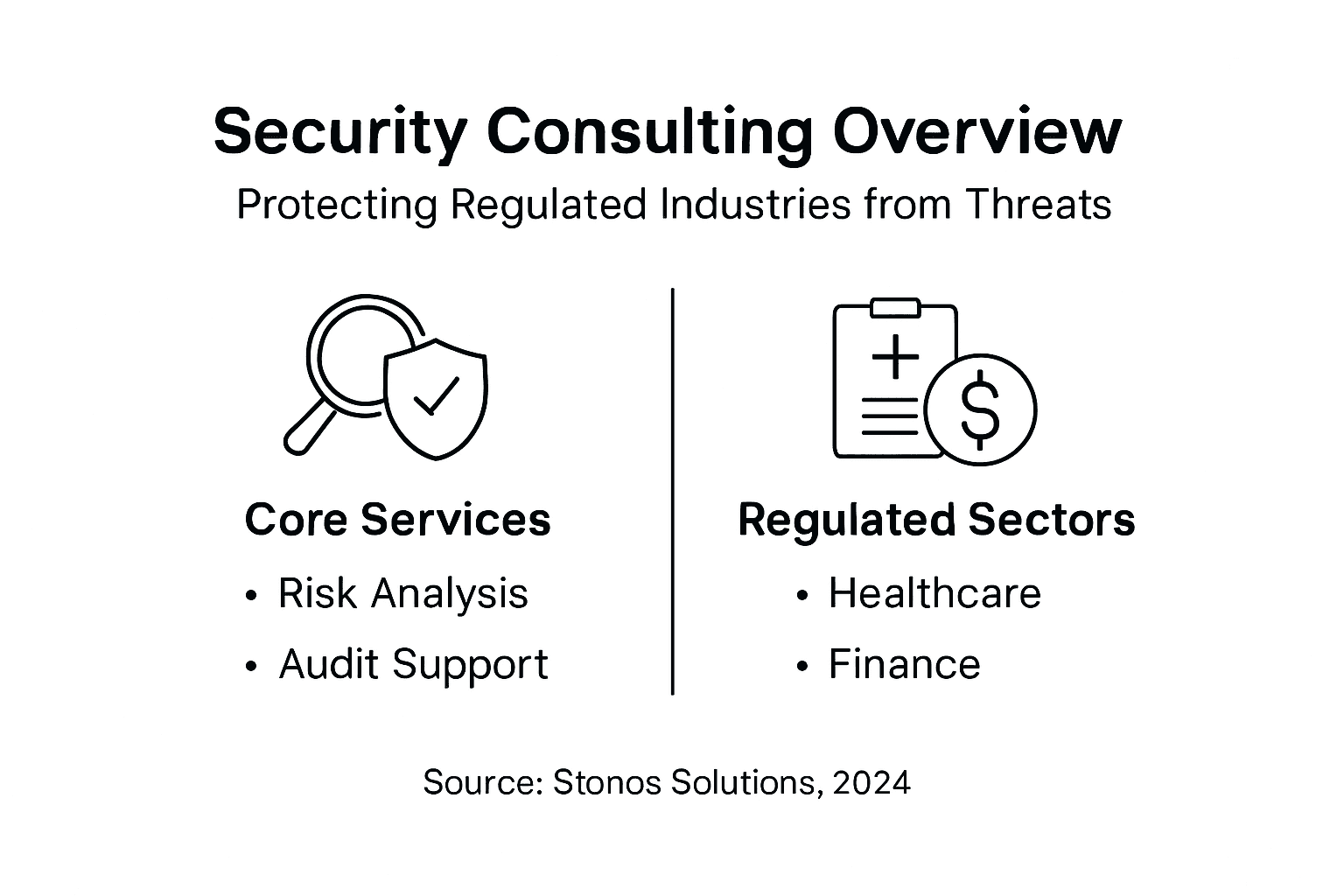
- Real-World Applications For Regulated Sectors
- Roles, Risks, And Obligations In Security Consulting
Key Takeaways
| Point | Details |
|---|---|
| Purpose of Security Consulting | Security consulting helps organizations identify, evaluate, and mitigate security risks in physical and digital domains through expert analysis and strategic recommendations. |
| Types of Services Offered | Key services include vulnerability assessments, penetration testing, compliance audits, and risk management advisory to address specific security challenges. |
| Compliance Frameworks | Organizations must navigate various compliance frameworks like GDPR, HIPAA, and PCI DSS to protect sensitive data and maintain operational integrity. |
| Roles in Security Consulting | Security consultants play critical roles in management, operational security, and compliance, requiring adaptability in complex threat environments. |
Defining security consulting and its purpose
Security consulting is a specialized professional service designed to help organizations identify, evaluate, and mitigate complex security risks across physical and digital domains. Security consulting originated before World War II, initially emerging from defense industry projects and evolving into a sophisticated discipline that addresses comprehensive protective strategies.
At its core, security consulting involves a systematic approach to protecting organizational assets through expert analysis and strategic recommendations. The primary objectives of security consulting include:
- Comprehensive threat assessment
- Infrastructure vulnerability evaluation
- Customized risk mitigation strategies
- Regulatory compliance planning
- Technology implementation guidance
Security consultants serve as critical partners for organizations navigating increasingly complex threat landscapes. They analyze existing security protocols, identify potential weaknesses, and develop actionable strategies tailored to each organization's unique operational context. Regulatory compliance and risk management are fundamental components of their professional expertise.
The purpose of security consulting extends far beyond simple risk identification. Proactive protection means developing comprehensive protocols that anticipate potential security challenges before they emerge. This involves a multifaceted approach that integrates technological solutions, human factors, strategic planning, and continuous adaptive assessment.
Pro tip: Always approach security consulting as a continuous, evolving process rather than a one-time intervention, recognizing that security requirements change dynamically with technological and threat landscapes.
Types of security consulting services offered
Security consulting encompasses a diverse range of professional services designed to address complex security challenges across multiple domains. Security consulting services include comprehensive assessments that help organizations identify, evaluate, and mitigate potential vulnerabilities in their security infrastructure.
The primary types of security consulting services typically encompass:
- Vulnerability Assessments: Systematic evaluations of organizational security weaknesses
- Penetration Testing: Simulated cyber attacks to test system defenses
- White-box testing
- Grey-box testing
- Black-box testing
- Compliance Audits: Verifying adherence to industry-specific regulatory requirements
- Risk Management Advisory: Strategic guidance for mitigating potential security threats
These services are critical for organizations operating in regulated industries, where security breaches can have significant financial and reputational consequences. Cybersecurity consulting plays a particularly crucial role in protecting digital assets, involving detailed analysis of technological infrastructure, network security, and potential cyber threat landscapes.

Beyond technical assessments, security consulting also provides strategic support in developing comprehensive security frameworks. Private security industry services extend to crisis management, business continuity planning, and tailored security solutions that address sector-specific challenges. This holistic approach ensures organizations can proactively defend against evolving security risks across physical and digital domains.
Pro tip: When selecting security consulting services, prioritize providers with demonstrated expertise in your specific industry and a track record of adapting to emerging technological threats.
Compliance frameworks and regulatory requirements
Security compliance involves adhering to a complex landscape of legal, regulatory, and industry-specific standards that organizations must navigate to protect sensitive data and maintain operational integrity. These frameworks serve as critical blueprints for managing cybersecurity risks and establishing consistent security practices across different industries.
The most prominent compliance frameworks and regulatory requirements include:
- GDPR: General Data Protection Regulation (European data privacy)
- HIPAA: Health Insurance Portability and Accountability Act (Healthcare)
- PCI DSS: Payment Card Industry Data Security Standard (Financial Transactions)
- ISO/IEC 27001: International Information Security Management Standard
- NIST: National Institute of Standards and Technology Cybersecurity Framework
Each regulatory framework has unique requirements, but they share common objectives of protecting organizational and customer data, establishing clear security protocols, and creating mechanisms for accountability. Regulatory compliance is not a one-time achievement but a continuous process of monitoring, assessment, and adaptation to emerging technological and threat landscapes.
Implementing these frameworks requires a strategic approach that balances resource allocation, technological capabilities, and comprehensive risk management. Organizations must develop robust internal processes, conduct regular audits, and maintain detailed documentation to demonstrate compliance. This approach helps mitigate legal and financial risks while building trust with stakeholders and customers.
Here is a comparison of leading security compliance frameworks and their core areas of focus:
| Framework | Primary Industry | Main Objective | Unique Focus |
|---|---|---|---|
| GDPR | All (EU jurisdiction) | Protect personal data and privacy | Broad applicability across sectors |
| HIPAA | Healthcare | Safeguard health information | Protect patient medical data |
| PCI DSS | Financial Services | Secure payment card transactions | Reduce card fraud risk |
| ISO/IEC 27001 | All industries | Information security management | International certification |
| NIST CSF | All industries (US) | Develop robust cyber resilience | Strong government guidance |
Pro tip: Develop a comprehensive compliance roadmap that treats regulatory requirements as dynamic guidelines, not static checklists, and continuously update your security strategies.
Real-world applications for regulated sectors
Regulatory systems in security facilitate best practices through comprehensive frameworks that address critical challenges across multiple high-stakes industries. These systems are designed to protect sensitive assets, ensure operational integrity, and mitigate potential risks through structured, proactive approaches.
Key regulated sectors with specialized security consulting applications include:
- Healthcare: Protecting patient data and medical infrastructure
- HIPAA compliance management
- Electronic health record security
- Medical device vulnerability assessments
- Financial Services: Securing financial transactions and customer information
- Fraud prevention strategies
- Cybersecurity risk management
- Regulatory compliance monitoring
- Critical Infrastructure: Safeguarding essential national systems
- Energy grid security
- Telecommunications network protection
- Industrial control system defense
Security risk assessments demonstrate how security professionals develop tailored strategies that address sector-specific threats while maintaining robust compliance standards. These approaches go beyond generic solutions, instead creating nuanced frameworks that recognize the unique operational contexts of different industries.
Implementing sector-specific security consulting requires deep understanding of both technological vulnerabilities and regulatory landscapes. Organizations must continuously adapt their strategies, integrating advanced risk management techniques with comprehensive compliance protocols to effectively protect their most critical assets.
The following table summarizes how security consulting adapts to major regulated industries:
| Sector | Top Security Need | Typical Consulting Approach |
|---|---|---|
| Healthcare | Patient data confidentiality | Automated monitoring and HIPAA alignment |
| Financial Services | Transaction integrity | Fraud detection and regulatory compliance |
| Critical Infrastructure | System uptime and safety | Specialized risk assessments and ICS defense |
Pro tip: Develop sector-specific security frameworks that are flexible enough to evolve with emerging technological and regulatory challenges.
Roles, risks, and obligations in security consulting
Security role delineation is crucial for establishing effective organizational security governance. Security consultants navigate complex landscapes where precise role definition determines the success of risk management strategies and protective measures across regulated industries.
Key roles and responsibilities in security consulting include:
- Management Level:
- Strategic risk assessment
- Policy development
- Executive-level security recommendations
- Operational Security:
- Threat detection and mitigation
- Technical implementation of security protocols
- Continuous monitoring and reporting
- Consulting Professionals:
- Independent vulnerability analysis
- Customized risk mitigation strategies
- Regulatory compliance guidance
Security professionals face increasingly complex threat environments that demand extraordinary adaptability and strategic thinking. Their primary obligations extend beyond traditional risk identification to include proactive communication, cross-departmental collaboration, and developing resilient security frameworks that can anticipate and neutralize emerging technological vulnerabilities.
The most critical obligations for security consultants involve maintaining a delicate balance between comprehensive risk assessment and practical implementation. Organizational accountability requires consultants to provide actionable insights that align with each client's unique operational constraints, technological infrastructure, and regulatory requirements.
Pro tip: Develop a dynamic risk assessment methodology that treats security as an adaptive, continuous process rather than a static checklist.
Strengthen Your Security Posture in Regulated Industries Today
The article highlights the critical role of security consulting in protecting regulated sectors like healthcare, financial services, and critical infrastructure. Organizations face complex challenges such as maintaining regulatory compliance with HIPAA, PCI DSS, and NIST frameworks, conducting thorough risk assessments, and implementing adaptive, proactive security strategies. These pain points require expert guidance to continuously navigate evolving threats and regulatory demands.
At Stonos Solutions, we specialize in delivering tailored security consulting services designed to meet the unique needs of regulated industries. Our certified professionals provide comprehensive vulnerability analyses, penetration testing, and end-to-end risk management strategies to ensure your organization not only complies with standards but also fortifies its defenses against emerging risks. Partner with us to transform your security from reactive to proactive and gain peace of mind knowing your critical assets are protected.
Ready to take control of your security challenges and stay ahead of regulatory demands?
Explore how Stonos Solutions can help you build resilient, compliant security frameworks tailored specifically for your industry. Visit our site now to learn more and schedule a consultation.
Frequently Asked Questions
What is the primary purpose of security consulting in regulated industries?
Security consulting aims to help organizations identify, evaluate, and mitigate security risks across physical and digital domains, ultimately safeguarding sensitive assets and ensuring regulatory compliance.
What types of services do security consultants typically offer?
Security consultants provide a range of services including vulnerability assessments, penetration testing, compliance audits, and risk management advisory to help organizations strengthen their security posture.
How do compliance frameworks impact security consulting?
Compliance frameworks, such as GDPR and HIPAA, set legal and regulatory standards that organizations must adhere to. Security consulting helps organizations navigate these frameworks, ensuring they meet necessary requirements to protect data and maintain operational integrity.
What are the key roles and responsibilities of security consultants?
Security consultants are responsible for strategic risk assessment, policy development, operational security implementation, and regulatory compliance guidance, focusing on creating tailored risk mitigation strategies based on specific organizational needs.
Recommended
- Security Consulting for Integrators: Enabling Resilience - Stonos Solutions Blog
- Services for End Users - Stonos Solutions
- Security Services - Stonos Solutions
- How to Conduct Security Risk Assessment for HIPAA Compliance - Stonos Solutions Blog
- Cybersecurity and Data Protection | Singleclic
- Email Privacy Explained: Impact on Brand Trust – Atriomail
- Prompt Injection Prevention Techniques AI Security Implementation Guide
Louis Romano
Need Security Consulting?
Our expert team is ready to help you enhance your security posture.
Contact Us Today Download Capability StatementRelated Articles
Security gap analysis: steps, benefits, and best practices
Learn how to conduct a security gap analysis to identify hidden risks, close compliance gaps, and build a stronger security posture in regulated industries.
Read MoreEnterprise Security Checklist for Healthcare Compliance Success
Explore an actionable enterprise security checklist tailored for healthcare organizations. Follow a step-by-step process to ensure HIPAA compliance and risk management.
Read More7 Key Types of Cybersecurity Assessments for Healthcare
Learn about 7 essential types of cybersecurity assessments for healthcare organizations and get actionable tips to boost compliance and security.
Read More