What Is Physical Security Consulting: Risk Reduction Explained
What Is Physical Security Consulting: Risk Reduction Explained

Facing mounting compliance demands and escalating risks, many American healthcare organizations struggle to maintain robust protection across their facilities. Security managers now require more than basic locks and cameras. With threats ranging from unauthorized access to environmental hazards, specialized consulting offers a security-in-depth approach that blends layered deterrence, detection, and response. Discover how comprehensive assessments and nuanced strategies can transform your organization’s physical security posture.
Table of Contents
- Physical Security Consulting Core Principles
- Types of Physical Security Consulting Services
- Key Features of Consulting Assessments
- Compliance Requirements for Healthcare Facilities
- Common Pitfalls and Selecting Consultants
Key Takeaways
| Point | Details |
|---|---|
| Comprehensive Security Strategies | Effective physical security consulting relies on multi-layered strategies that address vulnerabilities in people, infrastructure, and critical resources. |
| Security-in-Depth Methodology | Employing layered protection ensures that even if one security measure fails, others will continue to protect organizational assets. |
| Tailored Risk Assessments | Consultants must conduct thorough risk assessments to create customized security strategies aligned with an organization's unique needs. |
| Holistic Compliance Approach | A successful security compliance framework integrates technology with organizational culture to meet regulatory requirements and maintain safety. |
Physical Security Consulting Core Principles
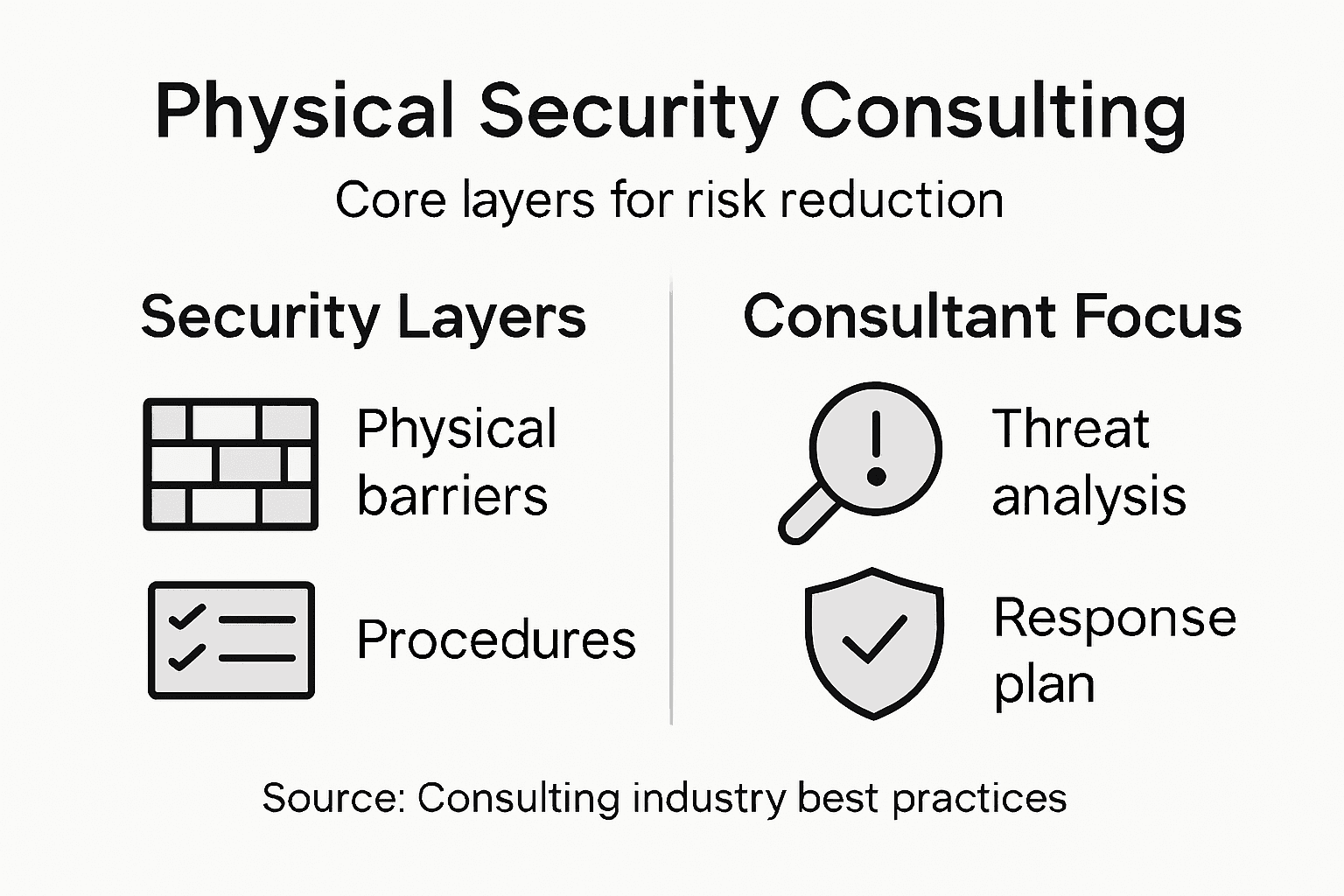
Physical security consulting represents a sophisticated approach to protecting organizational assets through strategic, multi-layered defense mechanisms. At its core, this discipline focuses on creating comprehensive security strategies that address potential vulnerabilities across people, infrastructure, and critical resources. Comprehensive security assessments form the foundation of effective physical security consulting.
The fundamental principles of physical security consulting revolve around several key strategic objectives:
- Deterrence: Preventing potential threats through visible security measures
- Detection: Identifying potential security breaches in real-time
- Delay: Creating obstacles that slow down unauthorized access attempts
- Response: Developing rapid intervention protocols for security incidents
Professional physical security consultants employ a security-in-depth methodology, which means creating multiple layers of protection that work together seamlessly. This approach ensures that even if one security measure fails, additional barriers remain to protect critical assets. The strategy involves integrating technological solutions, personnel training, and procedural protocols into a unified security framework.
Here's a summary of how layered security methodology benefits organizations:
| Security Layer | Purpose | Business Impact |
|---|---|---|
| Physical measures | Prevent unauthorized access | Protect physical assets and data |
| Technology solutions | Monitor and detect threats | Enhance real-time response capabilities |
| Personnel training | Improve staff awareness | Reduce human error vulnerabilities |
| Protocols and policies | Guide emergency actions | Strengthen regulatory compliance |
Understanding the unique risk profile of each organization is crucial in developing an effective physical security plan. Consultants typically conduct thorough risk assessments that evaluate potential threats, existing vulnerabilities, and the potential impact of security breaches. These assessments help create tailored security strategies that align with an organization's specific operational requirements and risk tolerance.
Pro tip: Always conduct a comprehensive vulnerability assessment before implementing any physical security strategy to ensure a targeted and effective approach.
Types of Physical Security Consulting Services
Physical security consulting encompasses a diverse range of specialized services designed to protect organizations from complex security threats. Physical security professionals develop comprehensive strategies tailored to unique organizational requirements, addressing vulnerabilities across multiple domains of security infrastructure.
The primary types of physical security consulting services include:
- Risk Assessment Services
- Comprehensive vulnerability evaluations
- Threat identification and analysis
-
Customized risk mitigation recommendations
-
Security System Design
- Electronic surveillance configuration
- Access control system planning
-
Integrated security technology solutions
-
Operational Security Consulting
- Security policy development
- Emergency preparedness training
- Incident response protocol design
Professional consultants typically approach physical security through a strategic, multi-layered methodology that integrates technological solutions with human expertise. Threat assessment remains a critical component, involving detailed analysis of potential security risks specific to an organization's infrastructure, operational context, and unique vulnerabilities. This approach ensures that security recommendations are not generic but precisely calibrated to address specific organizational challenges.
Moreover, physical security consulting extends beyond immediate technological interventions. Compliance consulting plays a crucial role, helping organizations navigate complex regulatory requirements and industry-specific security standards. Consultants provide guidance on meeting legal mandates, implementing best practices, and developing robust security frameworks that protect both physical assets and organizational reputation.
Compare key consulting service domains to understand their strategic focus:
| Service Domain | Core Objective | Typical Outcome |
|---|---|---|
| Risk Assessment | Identify & prioritize threats | Targeted mitigation strategies |
| System Design | Integrate security technologies | Optimized protection infrastructure |
| Operational Consulting | Strengthen procedures & response | Increased preparedness and resilience |
| Compliance Consulting | Align with regulations | Reduced legal and reputational risks |
Pro tip: Always engage physical security consultants who demonstrate expertise across multiple service domains and can provide holistic, integrated security solutions.
Key Features of Consulting Assessments
Physical security consulting assessments represent a critical, systematic approach to identifying and mitigating organizational vulnerabilities. Comprehensive security evaluations provide organizations with detailed insights into their existing security infrastructure, potential risks, and strategic improvement opportunities.
The key features of physical security consulting assessments typically encompass:
- Vulnerability Analysis
- Detailed facility layout examination
- Identification of potential security gaps
-
Assessment of existing protective measures
-
Risk Prioritization
- Threat environment evaluation
- Quantitative and qualitative risk scoring
-
Strategic mitigation recommendations
-
Compliance Verification
- Review of regulatory standards
- Assessment against industry benchmarks
- Identification of potential compliance gaps
Professional consultants employ a multi-dimensional approach to security assessments, integrating technological, human, and procedural elements. Systematic analysis involves a comprehensive review of physical barriers, electronic surveillance systems, access control mechanisms, and personnel policies. This holistic methodology ensures that security recommendations address not just technological solutions, but also organizational culture and human factors.

Moreover, the assessment process goes beyond mere identification of vulnerabilities. Actionable reporting provides organizations with prioritized recommendations, complete with implementation strategies, cost-benefit analyses, and potential impact assessments. Consultants typically develop detailed roadmaps that guide organizations through incremental security improvements, ensuring a structured and strategic approach to risk mitigation.
Pro tip: Request a comprehensive, written report with clear recommendations and prioritized action items to maximize the value of your physical security assessment.
Compliance Requirements for Healthcare Facilities
Healthcare facilities face complex regulatory landscapes that demand rigorous physical security protocols. HIPAA Security Rule requirements establish comprehensive standards for protecting patient information and ensuring organizational safety across multiple domains.
Key compliance requirements for healthcare facilities include:
- Administrative Safeguards
- Security management processes
- Designated security personnel
- Workforce security training
-
Information access management
-
Physical Security Controls
- Facility access restrictions
- Workstation and device security
- Inventory and tracking of hardware
-
Environmental protection measures
-
Technical Protection Strategies
- Electronic health record security
- Access control mechanisms
- Audit and monitoring systems
- Data encryption protocols
Healthcare organizations must implement a multilayered compliance approach that integrates technological solutions with comprehensive policy frameworks. This approach requires continuous risk assessment, regular security audits, and proactive vulnerability management to maintain regulatory alignment and protect sensitive patient information.
Moreover, compliance extends beyond technological implementations. Organizational culture plays a critical role in maintaining security standards, requiring consistent staff training, clear communication of security protocols, and development of a security-conscious workplace environment. Successful compliance demands a holistic strategy that addresses human, procedural, and technological dimensions of security.
Pro tip: Develop a comprehensive documentation system that tracks all security measures, training activities, and compliance efforts to demonstrate regulatory adherence during potential audits.
Common Pitfalls and Selecting Consultants
Selecting an effective physical security consultant requires careful evaluation and strategic decision-making. Qualifications-based selection processes are critical to ensuring that organizations partner with experts who can genuinely address their unique security challenges.
Common pitfalls in consultant selection include:
- Cost-Driven Decision Making
- Prioritizing lowest price over expertise
- Overlooking long-term value
-
Ignoring consultant's track record
-
Inadequate Scope Definition
- Vague project requirements
- Misaligned expectations
-
Incomplete understanding of organizational needs
-
Experience Assessment Failures
- Neglecting industry-specific expertise
- Insufficient background verification
- Overlooking relevant certifications
Professional physical security consultants bring comprehensive analytical capabilities that extend far beyond simple risk identification. They provide strategic insights, develop tailored solutions, and offer ongoing support that transforms security from a reactive measure to a proactive organizational strategy. The most effective consultants demonstrate deep understanding of technological, human, and procedural security dimensions.
Successful consultant selection demands a holistic evaluation approach. Organizations should prioritize consultants who demonstrate proven capabilities through verifiable case studies, industry certifications, and a demonstrated history of delivering complex security solutions across comparable organizational environments. This approach ensures that selected consultants can provide nuanced, sophisticated security strategies aligned with specific organizational requirements.
Pro tip: Request and thoroughly review comprehensive portfolios, client references, and detailed project case studies before making a final consultant selection.
Strengthen Your Security with Expert Physical Security Consulting
Organizations face complex challenges in protecting physical assets, managing vulnerabilities, and ensuring regulatory compliance. This article highlights key concerns like risk assessments, layered security strategies, and the importance of tailored mitigation plans. If your goal is to reduce risk, prevent unauthorized access, and maintain compliance in sectors such as healthcare or manufacturing physical security consulting becomes essential.
Stonos Solutions specializes in delivering comprehensive security assessments and customized risk management strategies aligned with your unique operational needs. Our expertise extends across technological integration, personnel training, and compliance support including HIPAA and NIST to help you build robust defenses against evolving threats.
Ready to protect your organization from physical security risks before they escalate Discover how Stonos Solutions can design and implement a multi-layered security plan that combines expert consulting, cutting-edge technology, and regulatory compliance guidance. Act now to secure your assets and gain peace of mind with trusted professionals by your side.
Frequently Asked Questions
What is physical security consulting?
Physical security consulting involves developing comprehensive strategies to protect organizational assets from potential threats through various layers of defense mechanisms.
Why is risk assessment important in physical security consulting?
Risk assessment is crucial because it identifies vulnerabilities and potential threats specific to an organization, enabling the development of targeted mitigation strategies that align with operational requirements.
What are the key principles of physical security consulting?
The key principles include deterrence, detection, delay, and response, which together form a multi-layered security strategy designed to prevent and manage security incidents effectively.
How can organizations benefit from hiring a physical security consultant?
Organizations can benefit from expert insights into security risks, tailored security strategies, compliance with regulations, and improved preparedness against potential security breaches.
Recommended
- Security Consulting for Integrators: Enabling Resilience - Stonos Solutions Blog
- Blog - Security Insights & Industry News - Stonos Solutions
- Services for End Users - Stonos Solutions
- How to Conduct Security Risk Assessment for HIPAA Compliance - Stonos Solutions Blog
- Why Secure Connectivity Matters
- Top Security Best Practices for Managed Email Platforms – Atriomail
Louis Romano
Need Security Consulting?
Our expert team is ready to help you enhance your security posture.
Contact Us Today Download Capability StatementRelated Articles
Security gap analysis: steps, benefits, and best practices
Learn how to conduct a security gap analysis to identify hidden risks, close compliance gaps, and build a stronger security posture in regulated industries.
Read MoreEnterprise Security Checklist for Healthcare Compliance Success
Explore an actionable enterprise security checklist tailored for healthcare organizations. Follow a step-by-step process to ensure HIPAA compliance and risk management.
Read More7 Key Types of Cybersecurity Assessments for Healthcare
Learn about 7 essential types of cybersecurity assessments for healthcare organizations and get actionable tips to boost compliance and security.
Read More