Why Choose Security Assessments in Healthcare
Why Choose Security Assessments in Healthcare

Healthcare organizations across the United States now face tighter regulations and mounting cyber threats, especially as digital health systems expand with connected medical devices and telehealth platforms. The stakes could not be higher, with cyberattacks targeting not just data but patient care and critical infrastructure. For cybersecurity professionals, mastering security assessments in healthcare is vital for identifying vulnerabilities, achieving regulatory compliance, and protecting sensitive information against sophisticated attacks.
Table of Contents
- Defining Security Assessments In Healthcare
- Types Of Security Assessments And Methods
- Key Compliance And Regulatory Drivers In 2026
- Risk Reduction And Incident Prevention Strategies
- Vendor Responsibilities And Common Pitfalls
Key Takeaways
| Point | Details |
|---|---|
| Importance of Security Assessments | Security assessments are vital for identifying and mitigating vulnerabilities in healthcare's complex digital ecosystems. Conducting them regularly helps maintain a strong cybersecurity posture. |
| Types of Assessments | Key methodologies include Vulnerability Assessments, Penetration Testing, Compliance Audits, and Risk Management Assessments, which collectively strengthen healthcare cybersecurity. |
| Regulatory Compliance | Evolving regulations in 2026 necessitate proactive compliance strategies, particularly regarding HIPAA, Telehealth guidelines, and breach reporting, to enhance data protection. |
| Vendor Management | Effective vendor management requires rigorous due diligence and continuous monitoring to ensure that third-party relationships meet stringent security standards. |
Defining Security Assessments in Healthcare
Healthcare cybersecurity has become increasingly complex with the rapid digital transformation of medical systems. Security assessments in healthcare represent comprehensive evaluations designed to identify, analyze, and mitigate potential vulnerabilities across digital infrastructure, medical devices, and information systems.
These assessments are critical because healthcare organizations manage extraordinarily sensitive data while operating complex technological ecosystems. Cyber physical systems in healthcare require dynamic safety and security risk monitoring that goes far beyond traditional IT security approaches.
Key components of healthcare security assessments typically include:
- Comprehensive digital infrastructure mapping
- Vulnerability identification across networks and systems
- Medical device security evaluations
- Patient data protection protocol analysis
- Regulatory compliance verification
- Risk mitigation strategy development
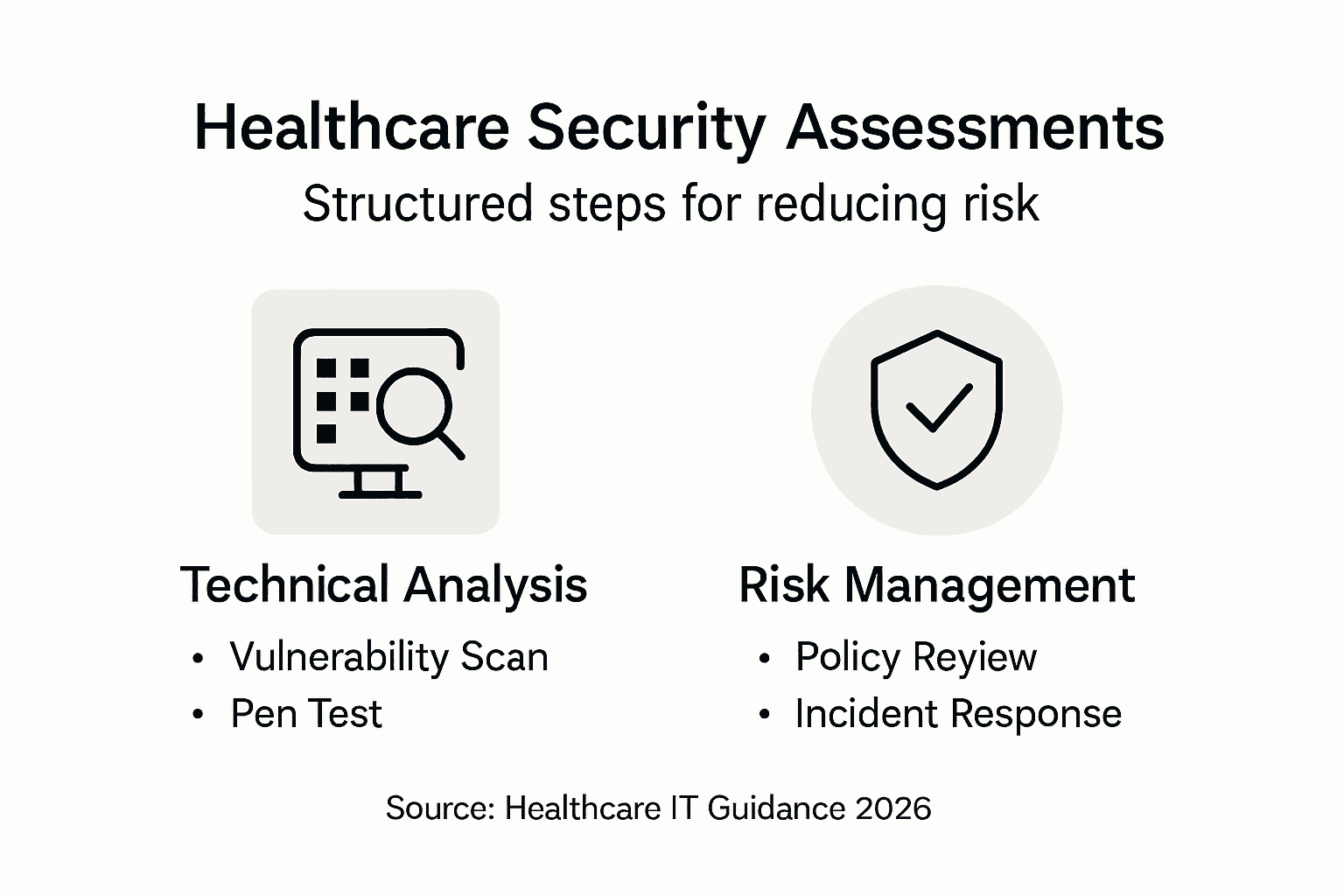
Healthcare security assessments follow structured methodologies that combine technical analysis with strategic risk management. Organizations utilize advanced frameworks like Bayesian Networks and extended Component Fault Trees to create continuous monitoring strategies that adapt to evolving cybersecurity threats.
Pro tip: Conduct security assessments annually and after any significant technology infrastructure changes to maintain robust cybersecurity posture.
Types of Security Assessments and Methods
Healthcare cybersecurity demands sophisticated and multifaceted assessment approaches to effectively protect complex digital ecosystems. Cybersecurity risk assessment frameworks play a critical role in systematically identifying, evaluating, and mitigating potential security vulnerabilities across healthcare technologies.
Security assessment methodologies in healthcare typically encompass several comprehensive strategies designed to address the unique challenges of medical technology environments. These methodologies help organizations understand their technological landscape, pinpoint potential weaknesses, and develop targeted risk mitigation strategies.
Key types of security assessments in healthcare include:
- Vulnerability Assessments
- Systematic scanning of network infrastructure
- Identification of potential system weaknesses
-
Evaluation of potential entry points for cyber threats
-
Penetration Testing
- Simulated cyberattacks to test system defenses
- Proactive identification of security gaps
-
Realistic assessment of potential breach scenarios
-
Compliance Audits
- Verification of regulatory standards adherence
- Assessment of data protection protocols
-
Ensuring alignment with HIPAA and other healthcare regulations
-
Risk Management Assessments
- Comprehensive analysis of potential security risks
- Prioritization of identified vulnerabilities
- Development of strategic mitigation plans
Healthcare organizations typically employ a combination of these assessment methods to create a robust, multi-layered security approach. Advanced frameworks like NIST, ISO, and OCTAVE provide structured methodologies for conducting thorough and systematic security evaluations.
Here's a summary of common security assessment frameworks used in healthcare:
| Framework | Primary Focus | Strengths | Typical Use Cases |
|---|---|---|---|
| NIST | Risk management and controls | Comprehensive guidelines | Hospitals, clinics, large systems |
| ISO 27001 | Information security management | International standardization | Global healthcare networks |
| OCTAVE | Risk evaluation and mitigation | Customizable to organization type | Small/medium medical practices |
| HIPAA | Patient data privacy | Legal compliance for health info | U.S. healthcare organizations |
Effective security assessments are not one-time events but continuous processes that adapt to evolving technological landscapes and emerging cyber threats.
Pro tip: Implement a rotating assessment schedule that covers different security assessment types throughout the year to maintain comprehensive cybersecurity protection.
Key Compliance and Regulatory Drivers in 2026
Healthcare cybersecurity is entering a critical phase with increasingly complex regulatory requirements that demand sophisticated security strategies. Healthcare compliance frameworks are evolving rapidly to address the growing sophistication of cyber threats and protect patient data across expanding digital ecosystems.
Regulatory mandates in 2026 are introducing more stringent requirements for healthcare organizations, focusing on comprehensive cybersecurity resilience and proactive risk management. The regulatory landscape is shifting from reactive compliance to anticipatory security strategies that prioritize continuous monitoring and adaptive protection mechanisms.
Key regulatory drivers for healthcare cybersecurity in 2026 include:
- HIPAA Expanded Protections
- Enhanced data security requirements
- Broader coverage for IoT and wearable device data
-
Stricter patient privacy guidelines
-
Telehealth Security Guidelines
- Mandatory multi-factor authentication
- Enhanced encryption standards
-
Comprehensive data transmission protocols
-
Breach Reporting Requirements
- Mandatory 72-hour breach notification
- Detailed incident documentation
-
Increased financial penalties for non-compliance
-
Interoperability Mandates
- FHIR standard implementation
- Standardized data exchange protocols
- Enhanced system integration requirements
Healthcare organizations must now invest in comprehensive security frameworks that go beyond traditional compliance checkboxes. The Cybersecurity and Infrastructure Security Agency (CISA) emphasizes the critical importance of proactive asset management, identity protection, and continuous vulnerability management.
Compare how major 2026 regulatory drivers impact healthcare cybersecurity strategies:
| Driver | Strategy Required | Organizational Impact |
|---|---|---|
| HIPAA Expansions | Upgrade data protections | Increased compliance efforts |
| Telehealth Guidelines | Strengthen access controls | More secure remote care |
| Breach Reporting | Accelerate incident response | Higher transparency standards |
| Interoperability | Standardize data exchange | Improved system collaboration |
Compliance is no longer a periodic exercise but a continuous, dynamic process of adaptation and improvement.
Pro tip: Develop a dedicated compliance team with specialized expertise in healthcare cybersecurity regulations to stay ahead of evolving regulatory requirements.
Risk Reduction and Incident Prevention Strategies
Healthcare organizations face increasingly complex challenges in protecting patient safety and preventing potential incidents. Risk management strategies have evolved into comprehensive approaches that address operational, clinical, technological, and cybersecurity risks with unprecedented depth and precision.

Proactive risk prevention requires a multifaceted strategy that integrates technological solutions, human expertise, and systematic organizational processes. Healthcare leaders must develop robust frameworks that identify potential vulnerabilities, implement targeted interventions, and create a culture of continuous improvement and accountability.
Key risk reduction strategies include:
- Comprehensive Risk Assessment
- Systematic identification of potential threats
- Prioritization of high-impact risks
-
Development of targeted mitigation plans
-
Technological Security Measures
- Advanced cybersecurity infrastructure
- Real-time threat monitoring systems
-
Automated vulnerability detection
-
Staff Training and Development
- Regular cybersecurity awareness programs
- Incident response skill development
-
Continuous learning protocols
-
Communication and Reporting Frameworks
- Clear incident reporting mechanisms
- Transparent communication channels
- Structured feedback loops
Healthcare organizations must recognize that effective risk reduction extends beyond technical solutions. The World Health Organization emphasizes creating safety cultures that prioritize prevention, continuous learning, and proactive risk management across all operational levels.
Risk management is not about eliminating all risks, but about understanding, managing, and mitigating potential threats systematically and intelligently.
Pro tip: Implement a quarterly comprehensive risk assessment process that involves cross-functional teams and leverages both technological tools and human expertise.
Vendor Responsibilities and Common Pitfalls
Navigating vendor relationships in healthcare cybersecurity requires meticulous attention to detail and comprehensive risk management strategies. Healthcare vendor risk management demands a sophisticated approach that goes beyond traditional procurement processes and focuses on protecting sensitive patient information.
Vendor security assessments are critical mechanisms for ensuring that third-party providers maintain rigorous standards of data protection and operational integrity. Healthcare organizations must develop comprehensive evaluation frameworks that thoroughly examine potential vendors' technological capabilities, security protocols, and compliance track records.
Key vendor responsibilities and potential pitfalls include:
- Due Diligence Requirements
- Comprehensive background investigations
- Verification of security certifications
-
Detailed financial and operational stability checks
-
Security Contract Specifications
- Explicit data protection clauses
- Clear incident response protocols
-
Defined liability and breach notification terms
-
Continuous Monitoring Obligations
- Regular security performance audits
- Ongoing compliance verification
-
Real-time threat detection collaboration
-
Data Handling and Privacy Protocols
- Strict patient information protection
- Transparent data management practices
- Adherence to HIPAA and regulatory standards
Healthcare organizations must recognize that vendor relationships are not static partnerships but dynamic interactions requiring constant vigilance and proactive management. Successful vendor management involves creating robust frameworks that anticipate potential risks and establish clear accountability mechanisms.
Vendor security is not about finding perfect partners, but about creating transparent, accountable, and adaptable collaborative relationships.
Pro tip: Develop a standardized vendor assessment scorecard that quantifies security risks and performance metrics to streamline your vendor selection and monitoring process.
Strengthen Your Healthcare Security with Expert Assessments
The article highlights the critical need for thorough security assessments to navigate complex healthcare cybersecurity challenges such as vulnerability identification, regulatory compliance, and proactive risk management. Facing expanding HIPAA requirements and the rise of telehealth security guidelines demands a trusted partner who understands the nuances of healthcare technology and the evolving threat landscape. Stonos Solutions offers tailored cybersecurity consulting services that align directly with these challenges, providing comprehensive penetration testing, vulnerability analyses, and risk reduction strategies that ensure your healthcare organization stays compliant and secure.
Take control of your healthcare security now by partnering with a veteran-owned firm specializing in HIPAA compliance, NIST frameworks, and advanced cybersecurity defenses. Visit Stonos Solutions to explore how our expert team can build and optimize your security systems for lasting protection. Don’t wait for a breach. Act today to protect your patients’ data and your organization’s reputation with comprehensive security assessments designed for the healthcare industry.
Frequently Asked Questions
What are security assessments in healthcare?
Security assessments in healthcare are comprehensive evaluations designed to identify, analyze, and mitigate potential vulnerabilities across digital infrastructure, medical devices, and information systems.
Why are security assessments critical for healthcare organizations?
Security assessments are critical because healthcare organizations manage highly sensitive data and operate complex technological ecosystems, making them prime targets for cyber threats.
How often should healthcare security assessments be conducted?
Healthcare security assessments should be conducted annually and after any significant changes to the technology infrastructure to maintain a robust cybersecurity posture.
What types of security assessments should healthcare organizations implement?
Healthcare organizations should implement a combination of vulnerability assessments, penetration testing, compliance audits, and risk management assessments to create a comprehensive security strategy.
Recommended
- How to Conduct Security Risk Assessment for HIPAA Compliance - Stonos Solutions Blog
- Top 7 Penetration Testing Tools for Small Business 2026 - Stonos Solutions Blog
- Services for End Users - Stonos Solutions
- Security Consulting for Integrators: Enabling Resilience - Stonos Solutions Blog
- Master Startup Risk Management Using AI Insights | siift
Louis Romano
Need Security Consulting?
Our expert team is ready to help you enhance your security posture.
Contact Us Today Download Capability StatementRelated Articles
Security gap analysis: steps, benefits, and best practices
Learn how to conduct a security gap analysis to identify hidden risks, close compliance gaps, and build a stronger security posture in regulated industries.
Read MoreEnterprise Security Checklist for Healthcare Compliance Success
Explore an actionable enterprise security checklist tailored for healthcare organizations. Follow a step-by-step process to ensure HIPAA compliance and risk management.
Read More7 Key Types of Cybersecurity Assessments for Healthcare
Learn about 7 essential types of cybersecurity assessments for healthcare organizations and get actionable tips to boost compliance and security.
Read More