Why Use Vulnerability Analysis—Ensuring Security Compliance
Why Use Vulnerability Analysis—Ensuring Security Compliance

Misunderstandings about vulnerability analysis can quietly expose organizations to risks that go far beyond technical glitches. For cybersecurity professionals and IT managers in regulated industries, the reality is that compliance and ongoing security depend on a continuous, nuanced approach rather than one-off checks or reliance on automated tools. This article uncovers the real meaning behind vulnerability analysis and tackles common myths, offering practical insights into building resilient systems that keep healthcare, government, and other critical operations secure and compliant.
Table of Contents
- Defining Vulnerability Analysis And Common Myths
- Types Of Vulnerability Analysis Methods
- Core Components And Process Steps
- Regulatory Requirements Across Major Industries
- Risk Prioritization And Remediation Strategies
- Costs, Compliance Penalties, And Common Pitfalls
Key Takeaways
| Point | Details |
|---|---|
| Vulnerability Analysis is Continuous | It is not a one-time event but an ongoing process that adapts to changing technological landscapes. |
| Common Myths Can Undermine Security | Misconceptions can lead to inadequate security strategies, highlighting the need for informed vulnerability analyses. |
| Integrated Methodologies Enhance Assessment | Combining multiple analysis methods, such as penetration testing and automated scanning, provides a robust security evaluation. |
| Compliance is Critical Across Industries | Organizations must proactively address regulatory requirements through regular assessments and documentation to avoid penalties. |
Defining Vulnerability Analysis and Common Myths
Vulnerability analysis represents a systematic approach to identifying, evaluating, and mitigating potential security risks within technological systems and organizational infrastructure. At its core, this process helps cybersecurity professionals proactively detect weaknesses before malicious actors can exploit them.
Contrary to popular misconceptions, vulnerability analysis is not a one-time event but a continuous, dynamic process that adapts to evolving technological landscapes. Conceptual evolution of vulnerability demonstrates that understanding security risks requires more than categorical checklists—it demands nuanced, comprehensive assessment.
Several common myths persist about vulnerability analysis that can undermine organizational security strategies:
- Myth 1: Vulnerability analysis is only necessary for large enterprises
- Myth 2: Automated scanning tools provide complete security coverage
- Myth 3: Passing a single security audit means permanent protection
- Myth 4: Vulnerability assessments are too expensive and time-consuming
These misconceptions often lead organizations to adopt inadequate or reactive security approaches. In reality, vulnerability analysis provides critical insights by:
- Identifying potential system weaknesses
- Prioritizing risks based on potential impact
- Creating structured remediation strategies
- Ensuring ongoing compliance with industry standards
Comprehensive vulnerability analysis requires a multifaceted approach that combines technological tools, human expertise, and strategic thinking. Policy-focused vulnerability research highlights the importance of understanding vulnerabilities not just as technical issues, but as complex systemic challenges.
Successful vulnerability assessments integrate multiple evaluation methods, including:
- Automated vulnerability scanning
- Manual penetration testing
- Risk assessment workshops
- Continuous monitoring and threat intelligence
Pro tip: Always treat vulnerability analysis as an ongoing process, not a one-time checkpoint, and integrate continuous learning and adaptation into your security strategy.
Types of Vulnerability Analysis Methods
Vulnerability analysis encompasses multiple sophisticated approaches designed to comprehensively assess and mitigate potential security risks across technological and organizational environments. Vulnerability assessment methodologies demonstrate the complexity and nuanced nature of identifying systemic weaknesses.
Organizations typically employ several core vulnerability analysis methods, each serving distinct strategic purposes:
- Network Vulnerability Scanning: Automated tools that probe computer networks for known weaknesses
- Penetration Testing: Simulated cyberattacks to identify exploitable vulnerabilities
- Risk Assessment Frameworks: Structured evaluations of potential threats and their potential impacts
- Threat Modeling: Systematic approach to identifying and prioritizing potential security risks
- Social Engineering Assessments: Evaluating human factors that might compromise organizational security
Comprehensive vulnerability analysis requires integrating multiple methodological approaches. Each method provides unique insights that collectively create a robust security assessment strategy.
Here's a concise comparison of vulnerability analysis methods and their unique strengths:
| Method | Best Application Scenario | Key Strength | Limitation |
|---|---|---|---|
| Network Vulnerability Scanning | Routine checks of computer networks | Fast, broad coverage | May miss complex vulnerabilities |
| Penetration Testing | In-depth audit of critical systems | Finds real exploitable flaws | Resource and time intensive |
| Threat Modeling | Planning new system or updates | Identifies design-level risks | Requires specialized expertise |
| Social Engineering Assessment | Assessing organizational risk culture | Exposes human factor threats | Results vary based on staff awareness |
The most effective vulnerability analysis strategies typically involve a multi-layered approach:
- Initial automated network scanning
- Manual penetration testing and verification
- Comprehensive risk assessment
- Continuous monitoring and threat intelligence gathering
- Regular security strategy refinement
Effective vulnerability analysis is not about finding every possible weakness, but strategically identifying and prioritizing the most critical potential security risks.
Successful vulnerability assessments must balance technological tools with human expertise, recognizing that security is a dynamic, evolving challenge requiring constant adaptation and strategic thinking.
Pro tip: Implement a cyclical vulnerability analysis process that treats security as an ongoing journey of continuous improvement rather than a static checkpoint.
Core Components and Process Steps
Vulnerability analysis requires a structured, systematic approach that transforms complex security challenges into manageable, actionable insights. Vulnerability analysis pathway documentation highlights the critical importance of a well-defined, repeatable process for comprehensive security assessment.
The core components of an effective vulnerability analysis process typically encompass several key strategic stages:
- Preparation and Scoping: Defining assessment boundaries and objectives
- Environment Configuration: Setting up secure testing infrastructure
- Vulnerability Detection: Identifying potential system weaknesses
- Risk Prioritization: Evaluating and ranking discovered vulnerabilities
- Remediation Planning: Developing targeted correction strategies
- Verification and Validation: Confirming successful vulnerability resolution
Detailed Process Steps provide a structured framework for comprehensive security evaluation:
- Initial Asset Inventory and Mapping
- Vulnerability Scanning and Detection
- Vulnerability Confirmation and Validation
- Risk Scoring and Prioritization
- Remediation Strategy Development
- Implementation of Security Improvements
- Continuous Monitoring and Reassessment
Vulnerability analysis is not a destination, but a continuous journey of security improvement and organizational resilience.
Comprehensive vulnerability assessments require advanced techniques that go beyond simple scanning. Vulnerability management guidelines emphasize the importance of creating a dynamic, iterative process that adapts to evolving technological landscapes.

Successful vulnerability analysis demands a holistic approach that combines technological tools, human expertise, and strategic thinking. Organizations must develop a flexible framework that can quickly identify, assess, and mitigate potential security risks across complex technological environments.
Pro tip: Implement a standardized scoring system like CVSS to consistently evaluate and prioritize discovered vulnerabilities across your entire technological ecosystem.
Regulatory Requirements Across Major Industries
Vulnerability analysis has become a critical compliance requirement across multiple regulated industries, with each sector developing specific guidelines to protect sensitive information and critical infrastructure. National vulnerability programs demonstrate the increasing complexity of regulatory expectations in cybersecurity management.
Different industries face unique regulatory landscapes that mandate comprehensive vulnerability assessment and management:
- Healthcare (HIPAA): Protecting patient data and medical system integrity
- Finance (PCI DSS): Securing financial transaction systems and customer information
- Government (FISMA): Maintaining national security and critical infrastructure protection
- Energy (NERC CIP): Safeguarding electrical grid and utility communication systems
- Telecommunications (FCC): Ensuring communication network security and reliability
Compliance Requirements typically encompass several key strategic elements:
- Regular vulnerability scanning and assessment
- Documented risk management processes
- Incident response and reporting mechanisms
- Continuous monitoring and system updates
- Employee security awareness training
Regulatory compliance is not just a checkbox exercise, but a fundamental approach to organizational risk management.
Vulnerability management guidelines underscore the importance of developing comprehensive, adaptive security strategies that go beyond minimal compliance requirements.
Below is a summary table outlining regulatory requirements for vulnerability analysis by industry:
| Industry | Key Standard | Focus of Regulation | Typical Assessment Frequency |
|---|---|---|---|
| Healthcare | HIPAA | Patient data and system integrity | Annual or on critical change |
| Finance | PCI DSS | Payment systems and transaction security | Quarterly vulnerability scans |
| Government | FISMA | National and agency digital assets | Ongoing, with annual reporting |
| Energy | NERC CIP | Electrical grid and utility systems | Quarterly to annual, as required |
| Telecommunications | FCC | Network reliability and confidentiality | Regular per regulatory guidance |
Successful regulatory compliance demands a proactive, holistic approach that integrates technological solutions, human expertise, and continuous improvement methodologies. Organizations must develop flexible frameworks that can rapidly adapt to evolving regulatory landscapes and emerging security challenges.
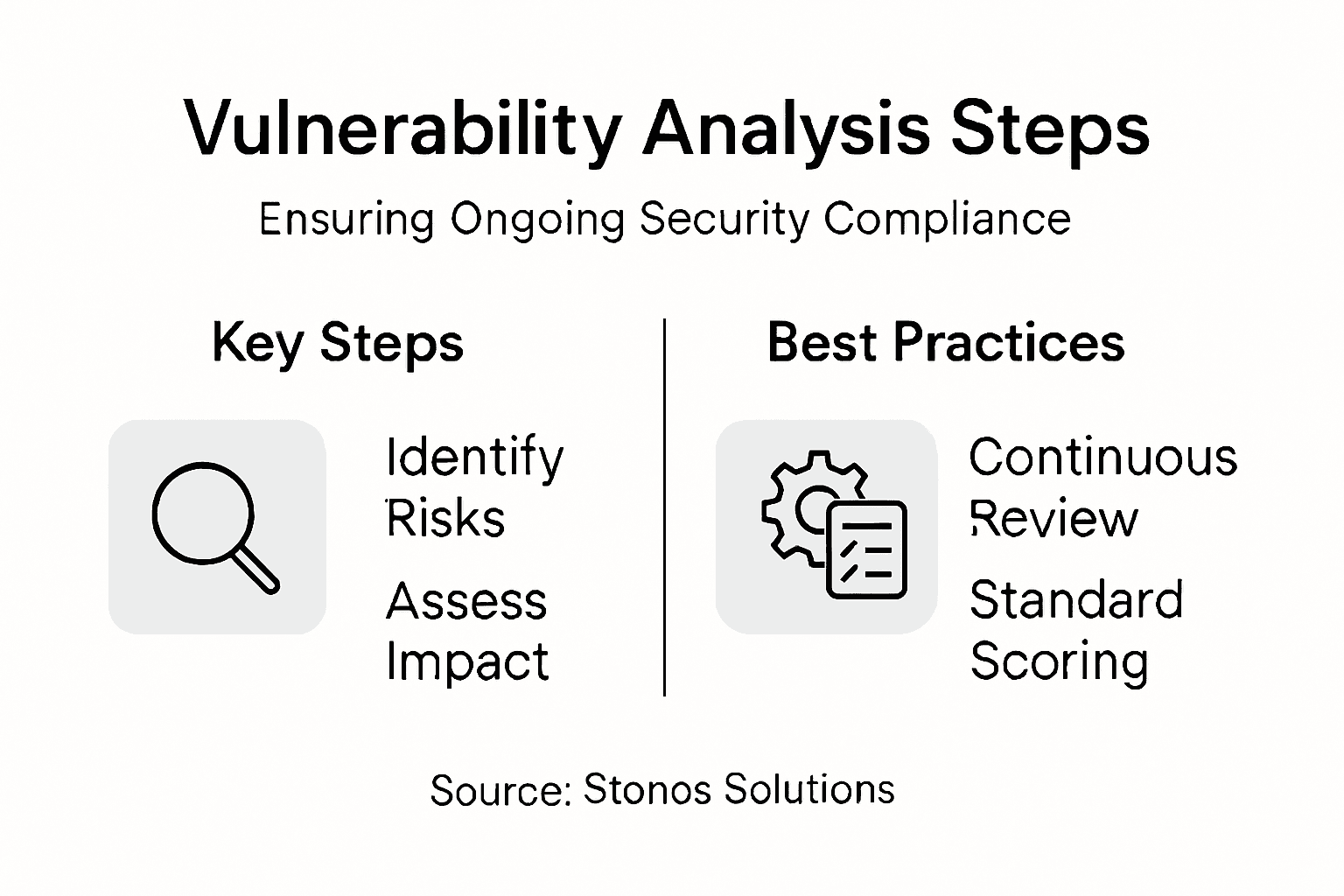
Pro tip: Create a centralized compliance tracking system that maps vulnerability assessment results directly to specific regulatory requirements for each industry.
Risk Prioritization and Remediation Strategies
Effective vulnerability management requires a sophisticated approach to identifying, evaluating, and addressing potential security risks across organizational technology ecosystems. Vulnerability management framework research demonstrates the critical importance of developing nuanced, data-driven strategies for risk prioritization.
Successful risk prioritization involves multiple strategic considerations:
- Threat Likelihood: Assessing the probability of potential exploit
- Potential Impact: Evaluating potential damage from vulnerability
- System Criticality: Understanding the strategic importance of affected systems
- Exploit Complexity: Determining technical difficulty of potential attacks
- Existing Mitigations: Analyzing current protective measures
Risk Scoring Methodology typically follows a structured approach:
- Initial Vulnerability Detection
- Technical Impact Assessment
- Contextual Risk Evaluation
- Prioritization Ranking
- Targeted Remediation Planning
- Implementation Verification
- Continuous Monitoring
Not all vulnerabilities are created equal - strategic prioritization is key to efficient security resource allocation.
Organizations must develop dynamic remediation strategies that balance immediate threat mitigation with long-term security infrastructure improvements. This requires a holistic approach that combines technological tools, human expertise, and strategic thinking.
The most effective remediation strategies incorporate:
- Rapid response protocols for critical vulnerabilities
- Systematic patch management processes
- Comprehensive system configuration reviews
- Ongoing employee security awareness training
- Adaptive security architecture design
Pro tip: Develop a standardized risk scoring matrix that translates technical vulnerability data into clear, actionable priority levels for decision makers.
Costs, Compliance Penalties, and Common Pitfalls
Vulnerability analysis represents a critical investment in organizational security, with costs and potential penalties varying widely across different industries and regulatory environments. Vulnerability assessment cost breakdown highlights the complex financial considerations organizations must navigate when implementing comprehensive security strategies.
Key financial considerations for vulnerability analysis include:
- Direct Assessment Costs: Technology, tools, and personnel expenses
- Compliance Penalty Risks: Potential fines for regulatory violations
- Operational Disruption Expenses: System downtime during assessments
- Remediation Implementation Costs: Addressing discovered vulnerabilities
- Ongoing Monitoring Investments: Continuous security management
Typical Compliance Penalty Ranges across major regulated industries:
- Healthcare (HIPAA): $100 to $50,000 per violation
- Finance (PCI DSS): Up to $100,000 monthly
- Government Contracts: Potential contract termination
- Telecommunications: Fines up to $150,000 per incident
- Energy Sector: Penalties ranging from $10,000 to $1 million
The cost of prevention is always lower than the cost of a comprehensive security breach.
True costs of vulnerability assessments reveal that organizations often underestimate the complex financial implications of security management.
Common pitfalls that can dramatically increase vulnerability analysis costs include:
- Inadequate scoping of assessment requirements
- Overlooking complex interdependencies in technology systems
- Insufficient internal expertise for comprehensive analysis
- Reactive instead of proactive security approaches
- Neglecting continuous monitoring and update processes
Pro tip: Develop a comprehensive budget that includes not just assessment costs, but potential compliance penalties, remediation expenses, and long-term security infrastructure investments.
Strengthen Your Security Posture with Expert Vulnerability Analysis
Organizations face complex challenges in continuously identifying and prioritizing security risks while ensuring regulatory compliance across industries like healthcare, finance, and government. This article highlights crucial pain points including the need for ongoing vulnerability analysis, strategic risk prioritization, and tailored remediation to prevent costly breaches and compliance penalties. At Stonos Solutions, we specialize in translating these key concepts such as penetration testing, risk scoring, and regulatory frameworks like HIPAA and PCI DSS into actionable cybersecurity strategies designed to protect your critical assets.
Our team of certified experts offers comprehensive security assessments and vulnerability analyses customized to your environment. We understand that vulnerability management is a dynamic, continuous journey requiring the right balance of advanced technological tools and human expertise. Explore how our solutions can help you build resilient defenses and meet evolving compliance demands with confidence.
Ready to transform your vulnerability analysis from a costly challenge into a strategic advantage?
Visit Stonos Solutions now to discover tailored cybersecurity services that bridge technical excellence with compliance mastery. Take the first step toward securing your organization's future and reducing risk exposure today.
Frequently Asked Questions
What is vulnerability analysis?
Vulnerability analysis is a systematic approach to identifying, evaluating, and mitigating potential security risks within technological systems and organizational infrastructure, helping to proactively detect weaknesses before they can be exploited.
Why is continuous vulnerability analysis important?
Continuous vulnerability analysis is essential because it adapts to the evolving technological landscape, ensuring that organizations remain aware of newly emerging threats and can maintain a robust security posture over time.
What common misconceptions exist about vulnerability analysis?
Common misconceptions include the belief that it is only necessary for large enterprises, that automated tools provide complete coverage, and that passing a single security audit guarantees permanent protection. These myths can lead to inadequate security strategies.
How does vulnerability analysis contribute to regulatory compliance?
Vulnerability analysis helps organizations meet regulatory requirements by ensuring regular assessments, documented risk management processes, and effective incident response plans, thereby reducing the risk of compliance penalties and enhancing overall security management.
Recommended
- Security Consulting for Integrators: Enabling Resilience - Stonos Solutions Blog
- Penetration Testing Services - Stonos Solutions
- How to Conduct Security Risk Assessment for HIPAA Compliance - Stonos Solutions Blog
- Services for End Users - Stonos Solutions
- AI Penetration Testing | Artificial Intelligence
Louis Romano
Need Security Consulting?
Our expert team is ready to help you enhance your security posture.
Contact Us Today Download Capability StatementRelated Articles
Why regulatory compliance matters: reduce risk, protect your org
Learn why regulatory compliance matters for healthcare, government, and industrial sectors. Discover frameworks and strategies to reduce risk and protect your organization.
Read MoreRegulatory Compliance Explained: Build Stronger Security
Learn what regulatory compliance really means, how the management cycle works, and how to navigate conflicts to build stronger security and organizational trust.
Read MoreWhy assess industrial security risks for compliance
Learn why industrial security risk assessment differs from IT risk management and how IEC 62443 methodology protects regulated industries from operational and compliance threats.
Read More